

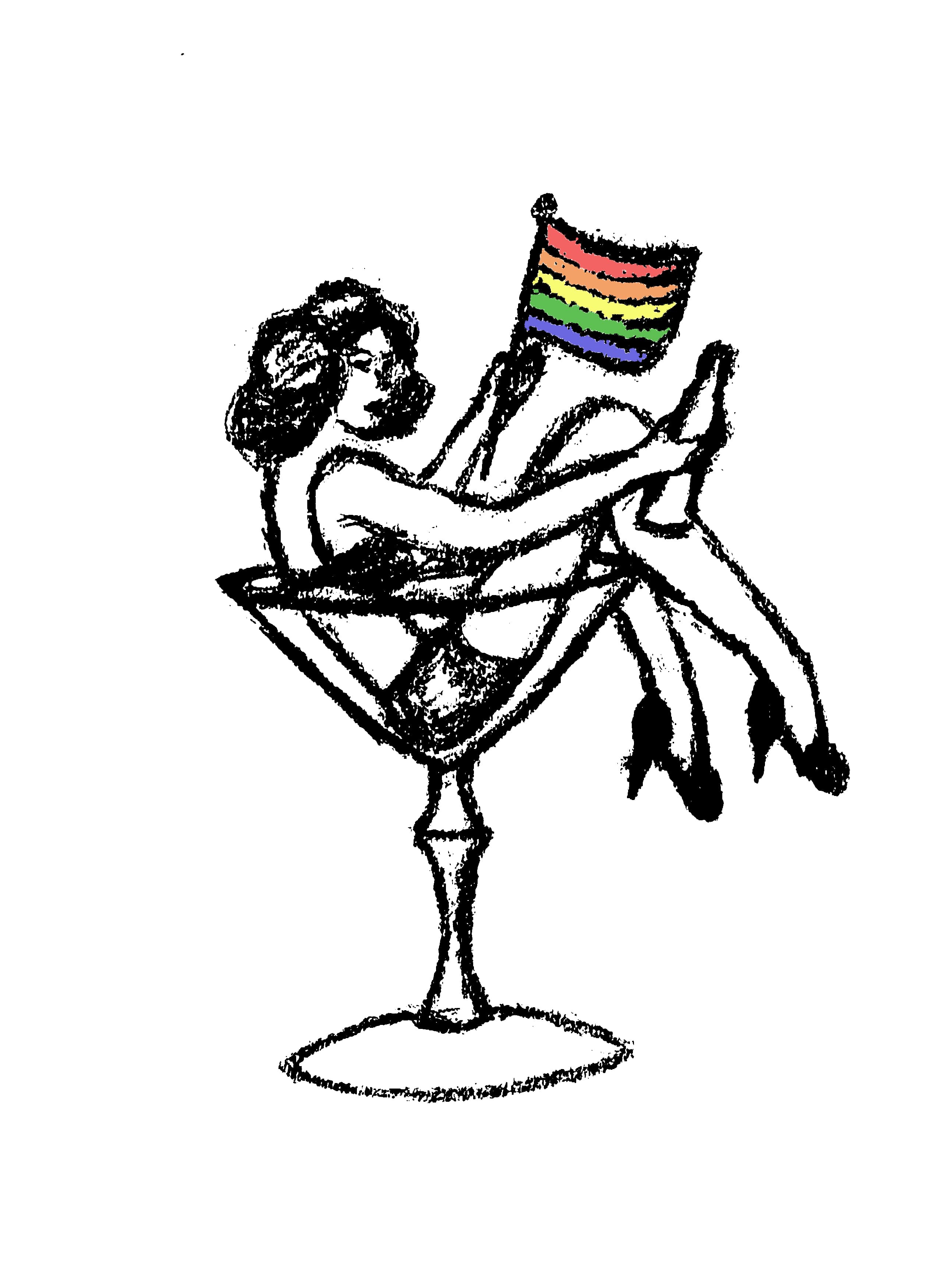
Bars, pubs, and taverns have been around for thousands of years, historically used as a place of gathering. What’s considered the “beginning” of the queer rights movement – the Stonewall Riots – occurred at a bar in Greenwich Village in New York City. The Stonewall Inn has since become an icon of queer culture in the United States.
Before the Stonewall Uprising in 1969, gay clubs were under close watch by authorities. The Hazel’s Inn raid was among the first of the infamous police raids. Hazel’s Inn – also called Hazel’s Casino or Hazel’s by the Sea – was an inn and lounge south of San Francisco. In the early 1950s, a wave of police raids swept the queer club community of the city. Locals sought refuge outside of San Francisco and at Hazel’s Inn. For a brief time, Hazel’s became a queer oasis. However, that changed on February 19, 1956, when the authorities arrested 90 people at the club, including owner Hazel Nickola.
The bar served not only as a space for people to find friendship and love but also as a place to discuss politics surrounding queer rights. During the AIDS epidemic, especially, these bars were meeting and organizing spaces for activists. At that time, lesbians took the forefront in caring for the gay men who were afflicted by the illness. Bars were the necessary third space for queer people at a time when being out was unacceptable. There is little information on what happened at the bars behind closed doors. What gay bars once were has become a thing of the past as queerness has become more accepted.
As the queer revolution progressed, gay bar culture skyrocketed throughout the 70s, 80s, and 90s. As the millennium turned, though, so did people’s attitudes surrounding queerness. Although it wasn’t total acceptance, queerness became more tolerated in the mainstream. Then, entering the 2010s, queer rights became solidified in many regions of the world, and it continues today. However, as being queer became societally acceptable, the need for secret and separate gay bars dwindled.
Gay bars are a dying culture. They still exist and serve as queer safe spaces, but the attitude toward them is very different now. They no longer serve as private meeting spaces; many people who aren’t queer have also started frequenting these spaces. According to The Lesbian Bar Project, there are only 34 lesbian bars left in the United States. Lesbian bars in particular are a dying breed, leaving sapphics to flock to more vulnerable spaces prone to misogyny, transphobia and fetishization.
Even within the queer community, women and gender-diverse people are at higher risk of discrimination. Local queer communities have historically centered white gay men, leaving people of color and other queer identities behind. Forced to make their own spaces, even separate from other gays, they flocked to the dive bars.
Even outside of dedicated gay bars, dive bars still provide a similar space and vibe to the clubs that once were. Cheap drinks, dim lights, good music, and the allure of anonymity create the formula for a perfect queer space, allowing open mingling and cruising to take place.
Before the Stonewall Uprising in 1969, gay clubs were under close watch by authorities. The Hazel’s Inn raid was among the first of the infamous police raids. Hazel’s Inn – also called Hazel’s Casino or Hazel’s by the Sea – was an inn and lounge south of San Francisco. In the early 1950s, a wave of police raids swept the queer club community of the city. Locals sought refuge outside of San Francisco and at Hazel’s Inn. For a brief time, Hazel’s became a queer oasis. However, that changed on February 19, 1956, when the authorities arrested 90 people at the club, including owner Hazel Nickola.
The bar served not only as a space for people to find friendship and love but also as a place to discuss politics surrounding queer rights. During the AIDS epidemic, especially, these bars were meeting and organizing spaces for activists. At that time, lesbians took the forefront in caring for the gay men who were afflicted by the illness. Bars were the necessary third space for queer people at a time when being out was unacceptable. There is little information on what happened at the bars behind closed doors. What gay bars once were has become a thing of the past as queerness has become more accepted.
As the queer revolution progressed, gay bar culture skyrocketed throughout the 70s, 80s, and 90s. As the millennium turned, though, so did people’s attitudes surrounding queerness. Although it wasn’t total acceptance, queerness became more tolerated in the mainstream. Then, entering the 2010s, queer rights became solidified in many regions of the world, and it continues today. However, as being queer became societally acceptable, the need for secret and separate gay bars dwindled.
Gay bars are a dying culture. They still exist and serve as queer safe spaces, but the attitude toward them is very different now. They no longer serve as private meeting spaces; many people who aren’t queer have also started frequenting these spaces. According to The Lesbian Bar Project, there are only 34 lesbian bars left in the United States. Lesbian bars in particular are a dying breed, leaving sapphics to flock to more vulnerable spaces prone to misogyny, transphobia and fetishization.
Even within the queer community, women and gender-diverse people are at higher risk of discrimination. Local queer communities have historically centered white gay men, leaving people of color and other queer identities behind. Forced to make their own spaces, even separate from other gays, they flocked to the dive bars.
Even outside of dedicated gay bars, dive bars still provide a similar space and vibe to the clubs that once were. Cheap drinks, dim lights, good music, and the allure of anonymity create the formula for a perfect queer space, allowing open mingling and cruising to take place.

Today and throughout history, the dive bar has served as a pseudo-haven for queers alike. In Pittsburgh, a man named Robert “Lucky” Jones owned a handful of gay clubs around the city. Combining the dive bar feel with a queer-centered clientele, places like the Real Luck Café still thrive today. Other combined gay-dive bars in Pittsburgh include Brewer’s, the city’s oldest, which opened in the 1980s.
In the past, cruising and courting rituals made up a major part of queer bar culture. A 1982 essay by Merril Mushroom, titled “How to Engage in Courting Rituals 1950s Butch Style in the Bar: An Essay,” takes the reader through these classical lesbian courting traditions. Ritual #1: cruising; ritual #2: the buying of the drink; ritual #3: the playing of the jukebox; ritual #4: the approach; ritual #5: the lighting of the cigarette; ritual #6: the asking of the dance; and finally, ritual #7: the dancing.
These rituals are a core part of queer history, and traces of them still carry through today; they simply may occur outside the secrecy of private gay clubs of the past. The dive bar symbolizes the natural extension of the dying queer bar. Holding similar aesthetics and general vibes, queer people flock to these settings to make up for the spaces we have lost. Especially today, in areas where queer rights are under attack, these bars and clubs remain safe spaces for queers to socialize and love.
In Krista Burton’s book, Moby Dyke: The Obsessive Quest to Track Down the Last Remaining Lesbian Bars in America, Burton journals her nationwide road trip to go to every lesbian bar in the United States (as of 2021-2022). At the time, 20 bars remained. Since the recovery from the COVID-19 pandemic and the recognition of the importance of sapphic spaces, that number has increased to 34.
There has been a renaissance in gay bar culture, but many sapphic- and trans-oriented spaces now take on the dive bar aesthetic. Compared to the sleek, modern feel of 2000s and 2010s gay bars, these newer ones are going back to their roots, putting a fun, vintage twist on the tiny dive bar.
Newer spots in Pittsburgh, such as Mary’s in Garfield, are at the forefront of these hybrid queer-dive spaces. Other places, like Belvedere’s in Lawrenceville, are where queers have carved their own safe spaces into something otherwise heteronormative. By blending these atmospheres, we not only reach back to our roots in gay bar culture but also unapologetically display our queer love and joy in spaces we may have previously been hidden.
For the queer community, navigating heteronormative society has always been difficult. After the hopeful era of Obama in the 2010s, queer rights are once again under attack by the government. Only 10 years after the ruling of Obergefell v. Hodges, the Supreme Court will once again take up the case starting Nov. 7, 2025, to decide whether to reassess marriage equality. This isn’t just happening in the United States; in the United Kingdom, judges are undermining gender recognition certificates, and in France, the rise of hate-fueled incidents caused significant concern in 2024. Living as a queer person today feels like there is a constant target on your back. When gender-diverse expression, race, ability, and socioeconomic status come into play, queers are pushed under the rug of society.
Bars are spaces that we can always go back to. Where there’s a bar, queers will make a space within it. Reclaiming such spaces as our own brings forth a sense of community not otherwise seen in real life. Much of the queer experience today exists online, with many of us first discovering queer terminology on sites such as Instagram, TikTok, and Tumblr. As we age out of the chronically online world, we enter these spaces and form communities in person. We take what we learned in our teen years to these bars and clubs, allowing our love and joy to move us forward.
The existence of these spaces is crucial in the ongoing fight for queer liberation. Queer joy is revolutionary – it is resistance – and the reclamation of spaces being taken away from us is one way the queer community is stepping up.
Love is, in essence, what the human experience is all about, and in this world, unfortunately, we sometimes have to hide our love. People will try to outdo it with hate, as they experience no love themselves. When love is hidden, so is human history. Preserving these expressions of love and care is crucial to continuing the joy of being human.
In the past, cruising and courting rituals made up a major part of queer bar culture. A 1982 essay by Merril Mushroom, titled “How to Engage in Courting Rituals 1950s Butch Style in the Bar: An Essay,” takes the reader through these classical lesbian courting traditions. Ritual #1: cruising; ritual #2: the buying of the drink; ritual #3: the playing of the jukebox; ritual #4: the approach; ritual #5: the lighting of the cigarette; ritual #6: the asking of the dance; and finally, ritual #7: the dancing.
These rituals are a core part of queer history, and traces of them still carry through today; they simply may occur outside the secrecy of private gay clubs of the past. The dive bar symbolizes the natural extension of the dying queer bar. Holding similar aesthetics and general vibes, queer people flock to these settings to make up for the spaces we have lost. Especially today, in areas where queer rights are under attack, these bars and clubs remain safe spaces for queers to socialize and love.
In Krista Burton’s book, Moby Dyke: The Obsessive Quest to Track Down the Last Remaining Lesbian Bars in America, Burton journals her nationwide road trip to go to every lesbian bar in the United States (as of 2021-2022). At the time, 20 bars remained. Since the recovery from the COVID-19 pandemic and the recognition of the importance of sapphic spaces, that number has increased to 34.
There has been a renaissance in gay bar culture, but many sapphic- and trans-oriented spaces now take on the dive bar aesthetic. Compared to the sleek, modern feel of 2000s and 2010s gay bars, these newer ones are going back to their roots, putting a fun, vintage twist on the tiny dive bar.
Newer spots in Pittsburgh, such as Mary’s in Garfield, are at the forefront of these hybrid queer-dive spaces. Other places, like Belvedere’s in Lawrenceville, are where queers have carved their own safe spaces into something otherwise heteronormative. By blending these atmospheres, we not only reach back to our roots in gay bar culture but also unapologetically display our queer love and joy in spaces we may have previously been hidden.
For the queer community, navigating heteronormative society has always been difficult. After the hopeful era of Obama in the 2010s, queer rights are once again under attack by the government. Only 10 years after the ruling of Obergefell v. Hodges, the Supreme Court will once again take up the case starting Nov. 7, 2025, to decide whether to reassess marriage equality. This isn’t just happening in the United States; in the United Kingdom, judges are undermining gender recognition certificates, and in France, the rise of hate-fueled incidents caused significant concern in 2024. Living as a queer person today feels like there is a constant target on your back. When gender-diverse expression, race, ability, and socioeconomic status come into play, queers are pushed under the rug of society.
Bars are spaces that we can always go back to. Where there’s a bar, queers will make a space within it. Reclaiming such spaces as our own brings forth a sense of community not otherwise seen in real life. Much of the queer experience today exists online, with many of us first discovering queer terminology on sites such as Instagram, TikTok, and Tumblr. As we age out of the chronically online world, we enter these spaces and form communities in person. We take what we learned in our teen years to these bars and clubs, allowing our love and joy to move us forward.
The existence of these spaces is crucial in the ongoing fight for queer liberation. Queer joy is revolutionary – it is resistance – and the reclamation of spaces being taken away from us is one way the queer community is stepping up.
Love is, in essence, what the human experience is all about, and in this world, unfortunately, we sometimes have to hide our love. People will try to outdo it with hate, as they experience no love themselves. When love is hidden, so is human history. Preserving these expressions of love and care is crucial to continuing the joy of being human.