

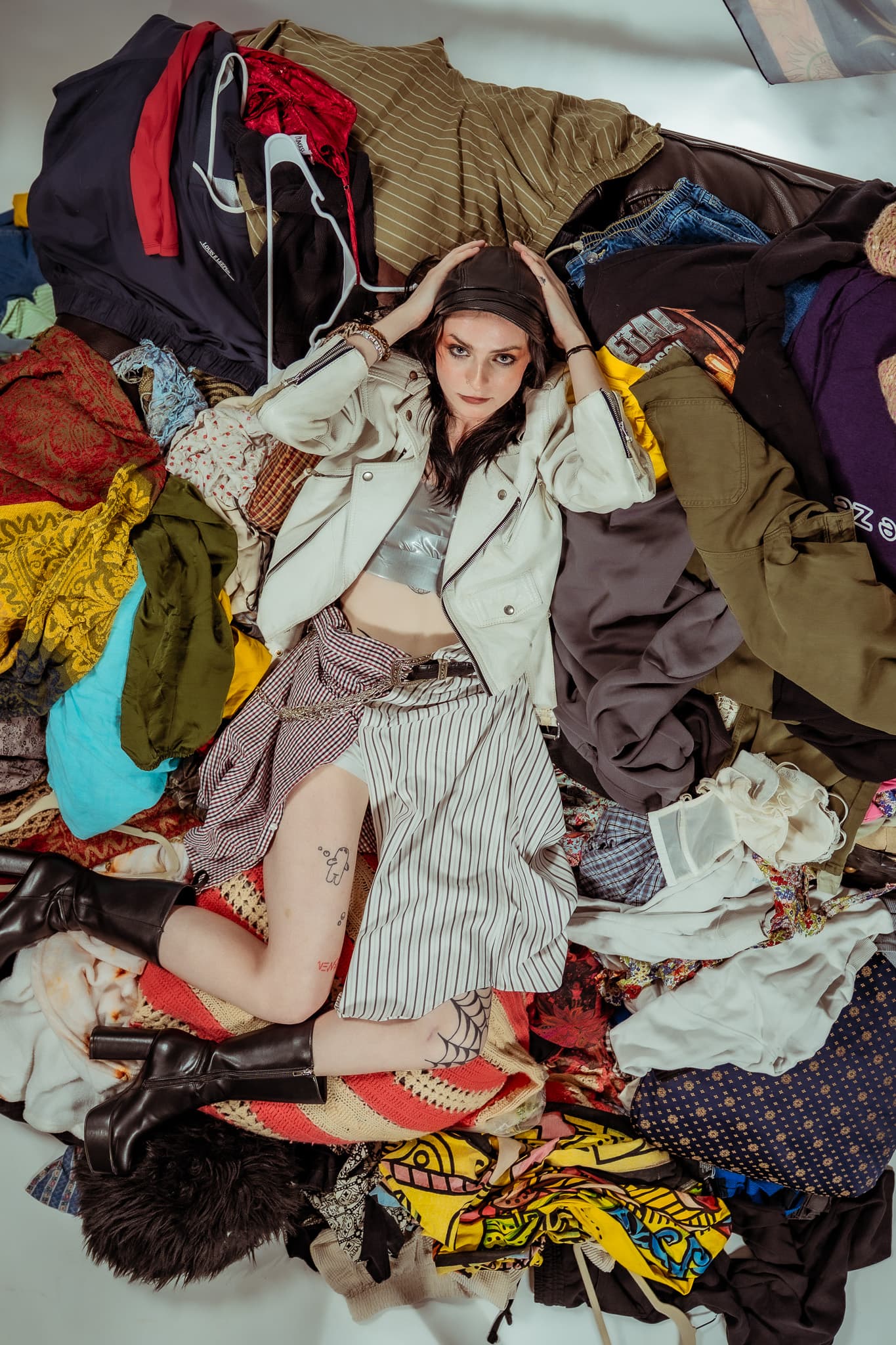
Social media-fueled hyperconsumerism is driving up sales – and environmental impact. Consumers are left feeling unfulfilled as modern fashion dilutes into an amalgamation of short-lived ‘microtrends’ and unassuming, minimalist designs. It’s time for us to shift back to our roots as a generation.
It’s often said that art imitates life -- and life, in turn, imitates art. In my two decades of observation, this reciprocity has been unmistakable in the shifting currents of fashion and visual culture, especially during the age of the internet. There was a time when maximalism and originality dominated everything from runway collections and glossy interiors to early social media feeds, corporate logos, and even household appliances; the contemporary aesthetics of our parents' generation were bedazzled, bold, colorful, and defiantly individual. In the back of every millennial or elder Gen Z closet resides an embroidered pair of low-rise jeans, an oversized tie-dye tank top, neon fabrics, animal prints, chunky turquoise jewelry, or perhaps a velvet ‘Juicy Couture’ tracksuit.
While presently associated with ‘kitsch’ and other nostalgic exemplars, these designs once defined an entire generation by their creativity, DIY ethos, and uncompromising sense of self. Yet, by the mid-2010s, something changed: that exuberant aesthetic had all but vanished. Its signature flair receded into obscurity, only to be replaced by sleek, minimalist design. Monotone shades of white and grey replaced the vibrant hues of color seen on preceding consumer products. Clean lines and simple silhouettes gradually won favor over embellishment and ornamentation. Runway designs and celebrity trends were copied and funneled onto retail websites within days, flooding the market with disposable look-alikes. What happened?
It’s often said that art imitates life -- and life, in turn, imitates art. In my two decades of observation, this reciprocity has been unmistakable in the shifting currents of fashion and visual culture, especially during the age of the internet. There was a time when maximalism and originality dominated everything from runway collections and glossy interiors to early social media feeds, corporate logos, and even household appliances; the contemporary aesthetics of our parents' generation were bedazzled, bold, colorful, and defiantly individual. In the back of every millennial or elder Gen Z closet resides an embroidered pair of low-rise jeans, an oversized tie-dye tank top, neon fabrics, animal prints, chunky turquoise jewelry, or perhaps a velvet ‘Juicy Couture’ tracksuit.
While presently associated with ‘kitsch’ and other nostalgic exemplars, these designs once defined an entire generation by their creativity, DIY ethos, and uncompromising sense of self. Yet, by the mid-2010s, something changed: that exuberant aesthetic had all but vanished. Its signature flair receded into obscurity, only to be replaced by sleek, minimalist design. Monotone shades of white and grey replaced the vibrant hues of color seen on preceding consumer products. Clean lines and simple silhouettes gradually won favor over embellishment and ornamentation. Runway designs and celebrity trends were copied and funneled onto retail websites within days, flooding the market with disposable look-alikes. What happened?
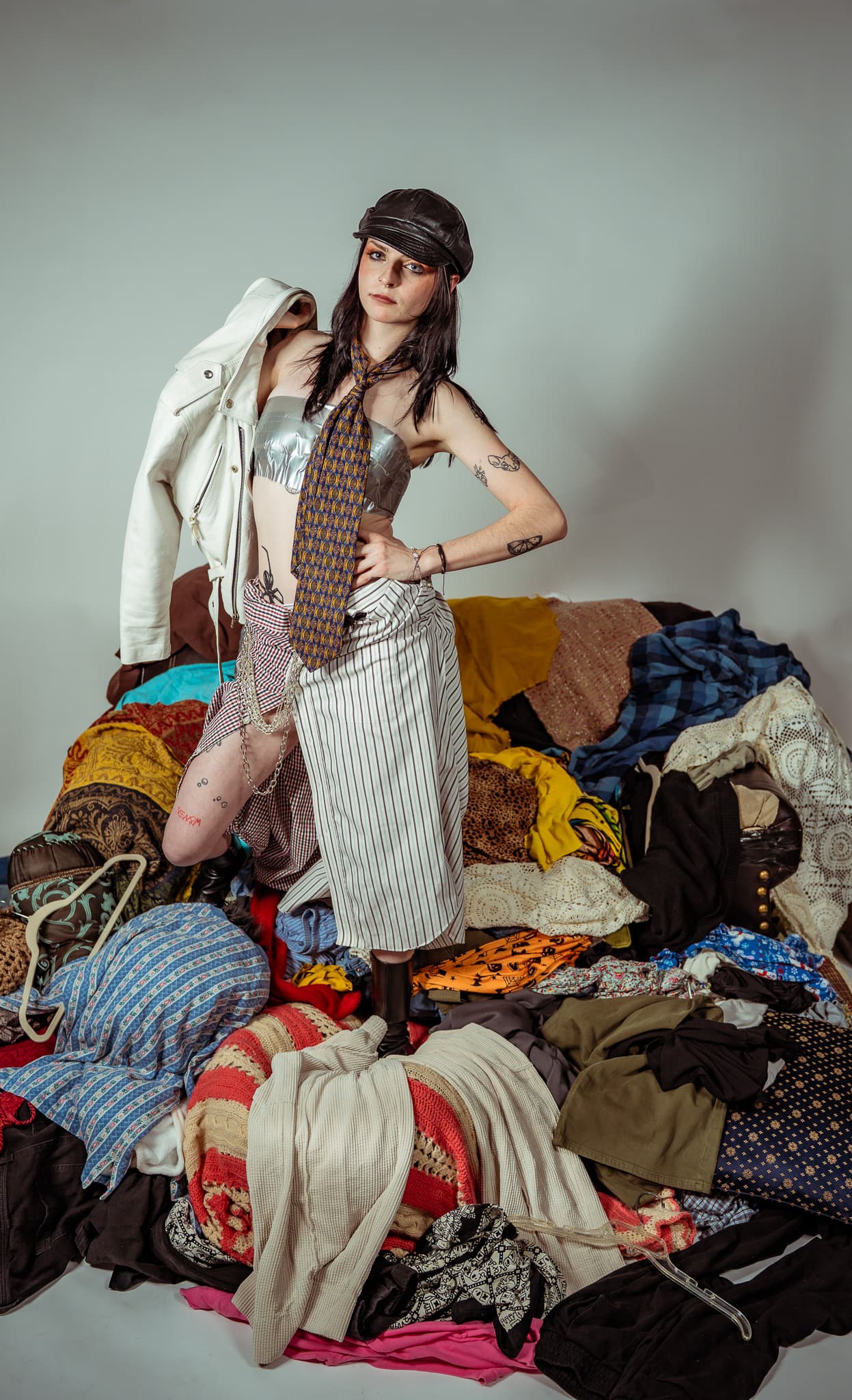
Your grandparents were right. It’s that damn phone.
Just as art had exerted its influence over popular culture and reality, reality was about to leave its mark on conventional fashion and design. In 2007, Apple initiated the broadest cultural shift of the 21st century with the release of the first iPhone. The influence of such pivotal innovation reached beyond the tech sphere, dramatically shifting society’s aesthetic values as a whole. The Silicon Revolution embodied the qualities of comfort: sleek, smooth, efficient convenience at the touch of a button (or screen), cultivating a hunger for visual ‘calm’. Instagram, Pinterest, and other social media platforms rewarded ‘clean’, uncluttered visuals that evoked ideals of the chic, ‘uniformesque’ luxury of the modern age. “Less is more” became the new motto for all branches of industry, and slowly, it wormed its way into the public’s collective psyche.
In the aftermath of the 2008 financial crisis, brands such as H&M, ZARA, Uniqlo, Lululemon, and Everlane formally adopted the minimalist “Calvin Klein approach” to fashion, responding to a socioeconomic climate that necessitated enduring textiles, combining quality with function. The minimalist movement spread like a wildfire across online fashion forums, promising to promote sustainability while removing the stigma of ‘repeating’ outfits. ‘Ethical consumption’ quickly emerged as a branding motif in the fashion world, eventually parroted by clothing companies and adopted as a trend online.
Just as art had exerted its influence over popular culture and reality, reality was about to leave its mark on conventional fashion and design. In 2007, Apple initiated the broadest cultural shift of the 21st century with the release of the first iPhone. The influence of such pivotal innovation reached beyond the tech sphere, dramatically shifting society’s aesthetic values as a whole. The Silicon Revolution embodied the qualities of comfort: sleek, smooth, efficient convenience at the touch of a button (or screen), cultivating a hunger for visual ‘calm’. Instagram, Pinterest, and other social media platforms rewarded ‘clean’, uncluttered visuals that evoked ideals of the chic, ‘uniformesque’ luxury of the modern age. “Less is more” became the new motto for all branches of industry, and slowly, it wormed its way into the public’s collective psyche.
In the aftermath of the 2008 financial crisis, brands such as H&M, ZARA, Uniqlo, Lululemon, and Everlane formally adopted the minimalist “Calvin Klein approach” to fashion, responding to a socioeconomic climate that necessitated enduring textiles, combining quality with function. The minimalist movement spread like a wildfire across online fashion forums, promising to promote sustainability while removing the stigma of ‘repeating’ outfits. ‘Ethical consumption’ quickly emerged as a branding motif in the fashion world, eventually parroted by clothing companies and adopted as a trend online.
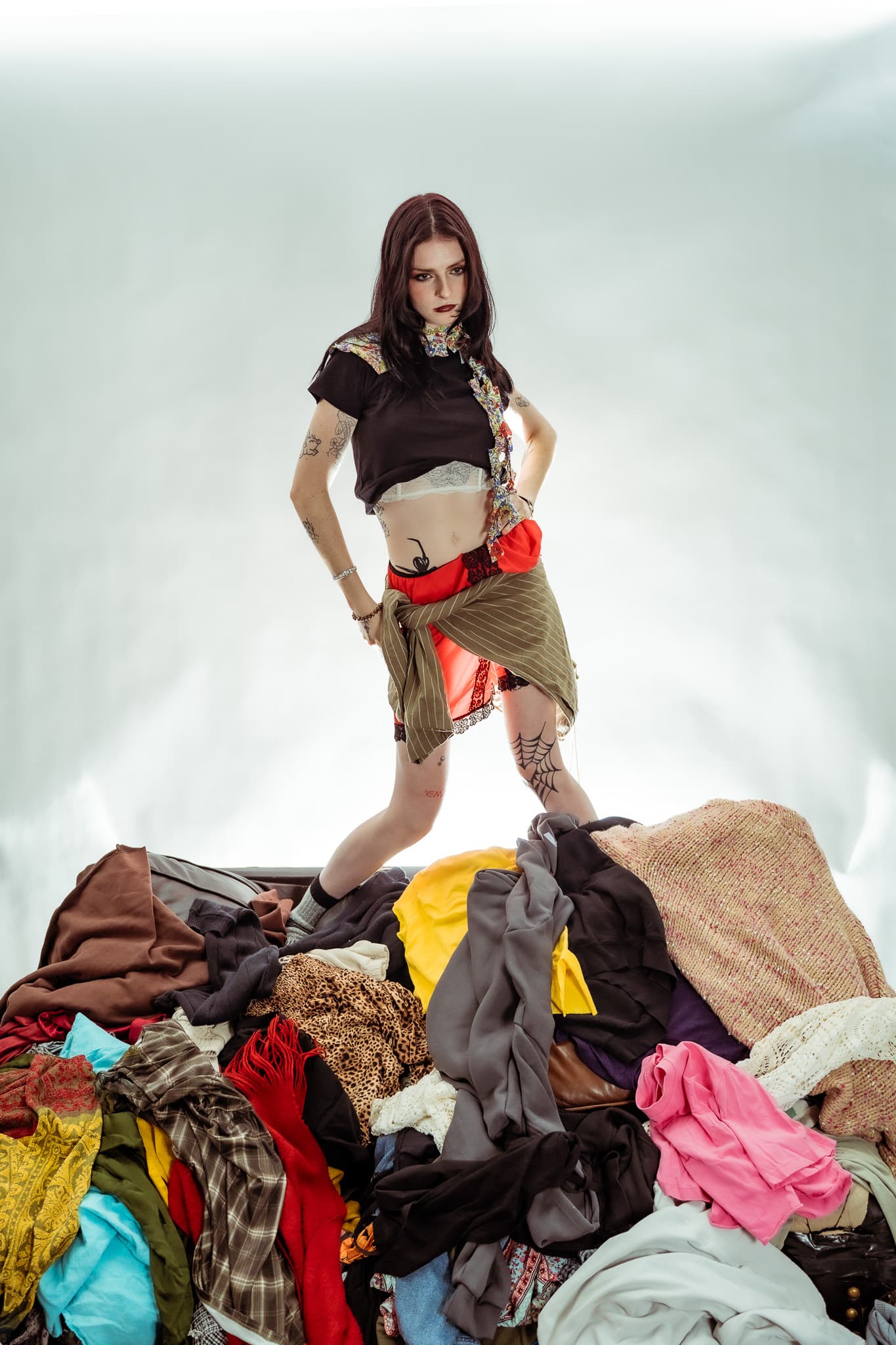
But were these promises actually fulfilled? Despite lofty expectations, little was actually accomplished in terms of reducing the fashion industry’s environmental impact. Textile waste continues to accumulate in landfills at an alarming rate, as the average American throws out 81.5lbs of clothing every year. On average, customers keep clothing for about half as long as they did in the early 2000s, with garments being worn 36% fewer times on average than they were 15 years ago.
Ever-shifting internet microtrends created a relentless cycle of consumption and rapid obsolescence, pushing millions of users to chase the curated aesthetics of celebrity influencers. To satiate these demands, textile companies kicked production into overdrive, churning out 100 billion pieces of cheaply-made clothing every year, as reported by the EPA. Engineered to be as efficient as possible, these companies hold little regard for quality, functionality, environmental impact, or the well-being of textile workers. Today, consumers are increasingly dissatisfied with the retail landscape, both online and in stores.
Ever-shifting internet microtrends created a relentless cycle of consumption and rapid obsolescence, pushing millions of users to chase the curated aesthetics of celebrity influencers. To satiate these demands, textile companies kicked production into overdrive, churning out 100 billion pieces of cheaply-made clothing every year, as reported by the EPA. Engineered to be as efficient as possible, these companies hold little regard for quality, functionality, environmental impact, or the well-being of textile workers. Today, consumers are increasingly dissatisfied with the retail landscape, both online and in stores.
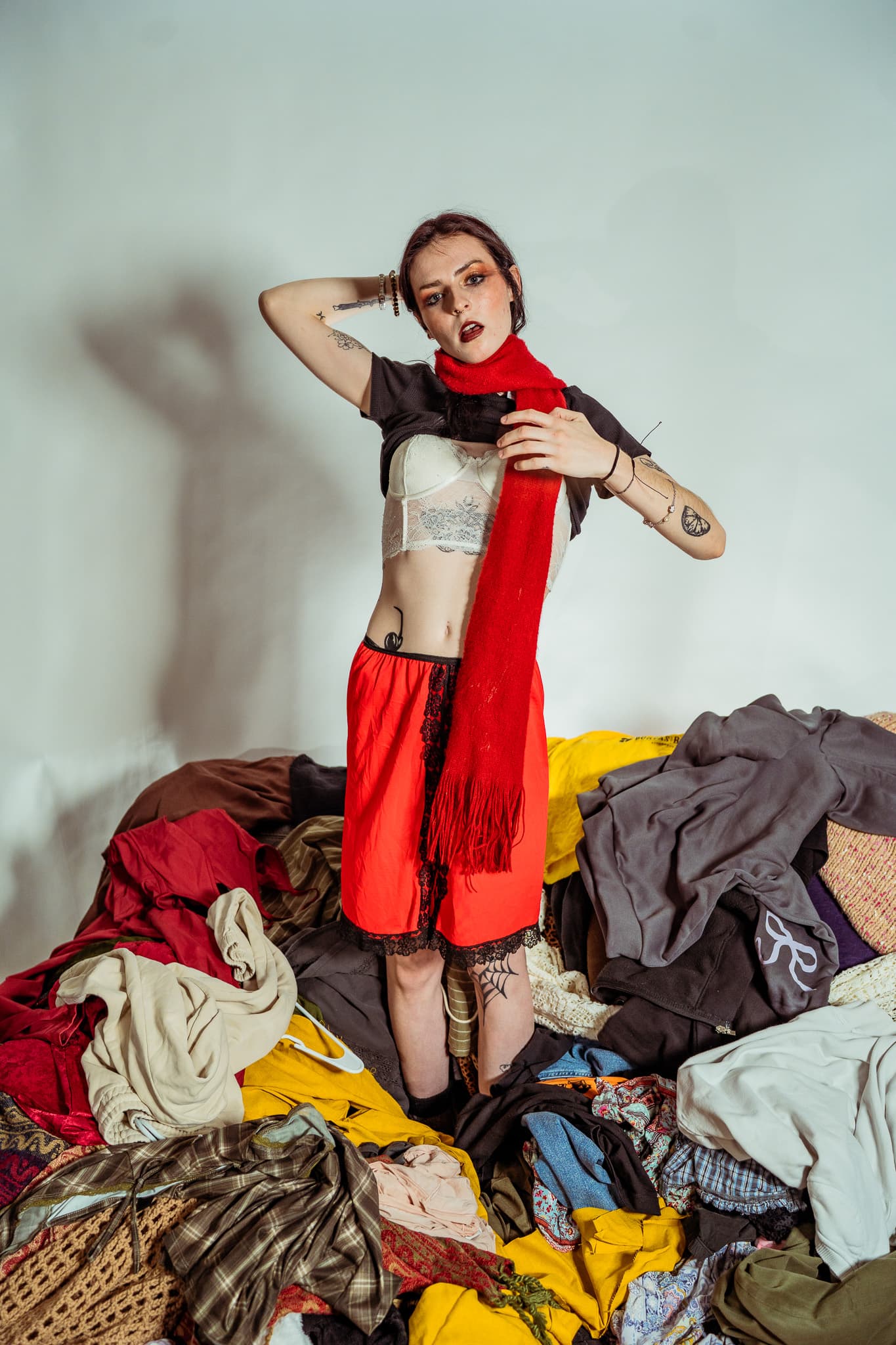
Oh, the things we’d give to go back.
Given the circumstances, it’s hardly surprising that nostalgia has become one of the defining engines of 2020s fashion. The first major wave hit with the force of a frilled, neon tide in 2016, when Season 1 of Stranger Things reintroduced the early 1980s as an aesthetic fantasy. The catalyst was initiated as millions of Netflix viewers became enamored by the effortlessly ‘rad’, retro aesthetics of the early 1980s -- leaving many with a desire to “go back” and experience it for themselves.
While the particulars of the growing ‘nostalgia’ trend have evolved substantially since then (it appears that 1990s and 2000s trends are all the rage now), the underlying mentality is still the same with each iteration; there is just something about the past that satiates our most elemental desire for escapism.
Borrowing aesthetic elements from decades past is not unheard of in modern fashion history. Trends in fashion and media, according to historians and cultural theorists, periodically re-emerge every 20 years. The current cycle, however, has proven to be distinct in that nearly every upcoming trend ‘borrows’ its style from some pre-2010s predecessor. Nostalgia-inspired fashion is no longer confined to individual, standalone garments or runway statement pieces. Instead, it has come to embody the overarching visual theme of the current decade.
Given the circumstances, it’s hardly surprising that nostalgia has become one of the defining engines of 2020s fashion. The first major wave hit with the force of a frilled, neon tide in 2016, when Season 1 of Stranger Things reintroduced the early 1980s as an aesthetic fantasy. The catalyst was initiated as millions of Netflix viewers became enamored by the effortlessly ‘rad’, retro aesthetics of the early 1980s -- leaving many with a desire to “go back” and experience it for themselves.
While the particulars of the growing ‘nostalgia’ trend have evolved substantially since then (it appears that 1990s and 2000s trends are all the rage now), the underlying mentality is still the same with each iteration; there is just something about the past that satiates our most elemental desire for escapism.
Borrowing aesthetic elements from decades past is not unheard of in modern fashion history. Trends in fashion and media, according to historians and cultural theorists, periodically re-emerge every 20 years. The current cycle, however, has proven to be distinct in that nearly every upcoming trend ‘borrows’ its style from some pre-2010s predecessor. Nostalgia-inspired fashion is no longer confined to individual, standalone garments or runway statement pieces. Instead, it has come to embody the overarching visual theme of the current decade.
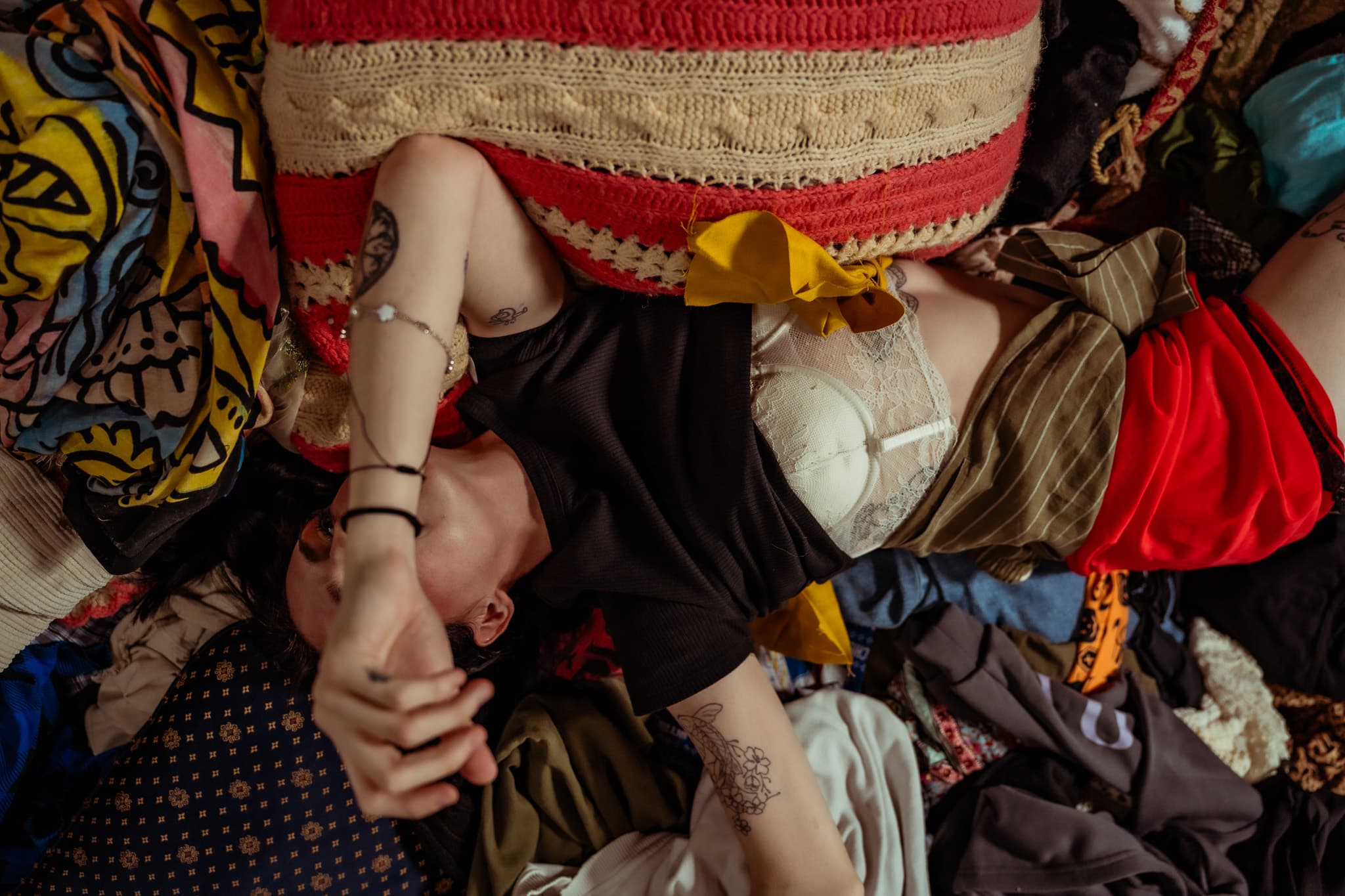
And it makes perfect sense; we are living through an era of rapid change and great economic, political, and environmental uncertainty. Gen Z, especially, has experienced multiple recessions, a global pandemic, rapid technological upheaval, and immense climate anxiety. For many young people, nostalgia is a psychological stabilizer in times of uncertainty. The continuity and sense of identity nostalgia-driven fashion provides offer a symbolic “return” to a time perceived as “safer”, simpler, and more comfortable.
Social media platforms (notoriously TikTok) are rife with envy for Gen Z’s formative years in the late 1990s and early 2000s. There exists a burgeoning cohort of young people harnessing the internet to revisit the cultural landscapes of previous decades. Expressions such as “I’d give anything to be a teenager in 2005,” “How to de-influence your life,” “McBling 2000s trashy-chic,” “Bring back MySpace,” “Make America Emo Again,” and “POV: you’re a scene kid in 2008” have become emblematic refrains within these online communities. Participants are reactive, frequently voicing incisive critiques of fast fashion, consumerism, minimalism, and the monotony of contemporary design.
But offering complaints without solutions is pointless. What is the next course of action?
Social media platforms (notoriously TikTok) are rife with envy for Gen Z’s formative years in the late 1990s and early 2000s. There exists a burgeoning cohort of young people harnessing the internet to revisit the cultural landscapes of previous decades. Expressions such as “I’d give anything to be a teenager in 2005,” “How to de-influence your life,” “McBling 2000s trashy-chic,” “Bring back MySpace,” “Make America Emo Again,” and “POV: you’re a scene kid in 2008” have become emblematic refrains within these online communities. Participants are reactive, frequently voicing incisive critiques of fast fashion, consumerism, minimalism, and the monotony of contemporary design.
But offering complaints without solutions is pointless. What is the next course of action?
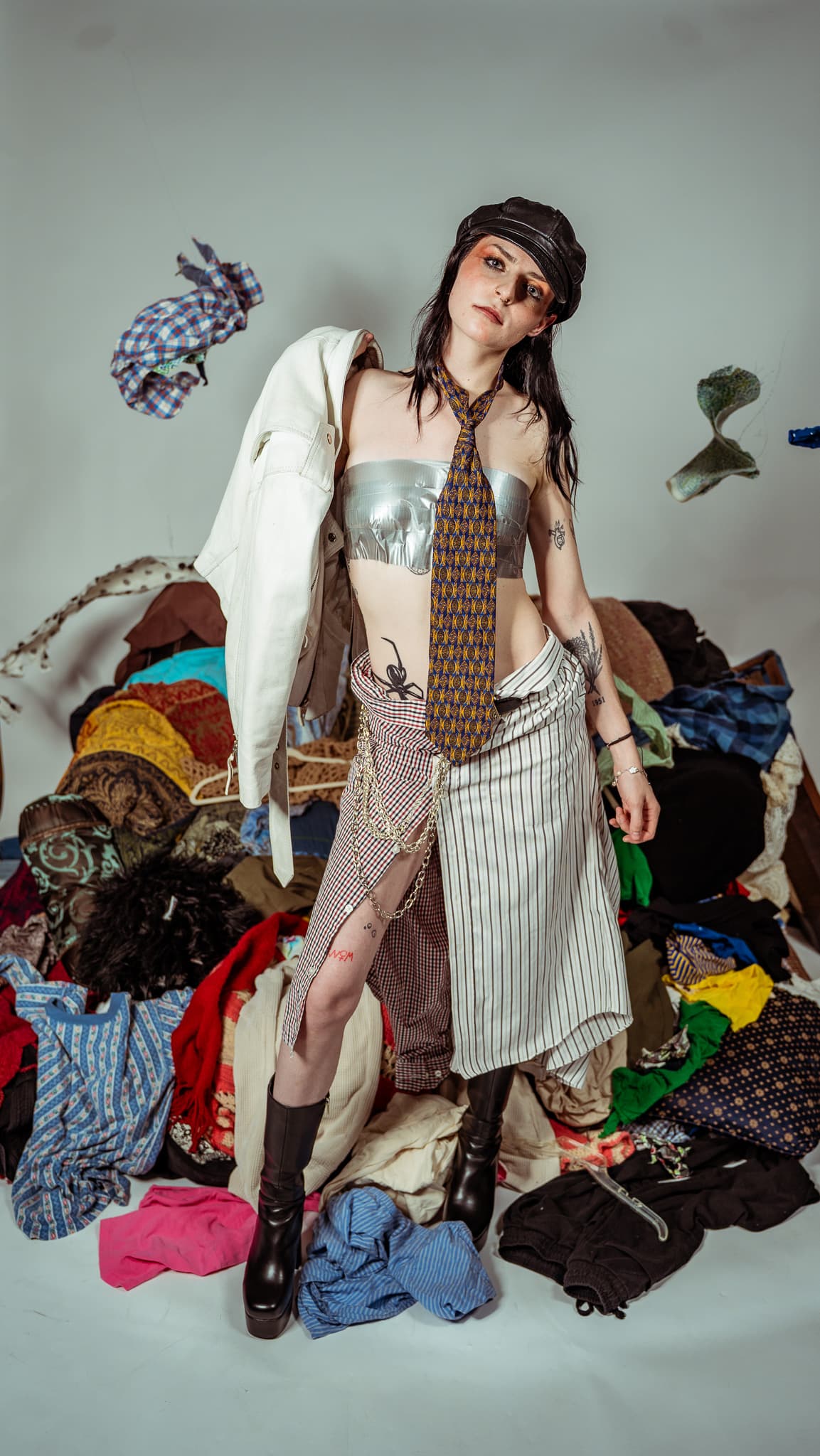
It’s time to break into DIY and break out the sewing machine.
In recent years, most prominently after the COVID-19 pandemic, many consumers (young people especially) gained a newfound sense of consumer consciousness, adding terms like “greenwashing” and “eco-posturing” to their vocabulary. In many online spaces, fast fashion has become as taboo as angora. Shein, Temu, ZARA, H&M, and their most loyal customers are frequently excoriated for their contributions to environmental degradation and poor working conditions.
As teens and young adults begin to rediscover skills like sewing, hemming, and other forms of DIY fashion, it appears that fast-fashion’s more sustainable and ethical counterpart, slow fashion, is demonstrating its potential to take over the scene. But what exactly is “slow fashion”?
Do you recall seeing ‘open-back ripped t-shirt’ tutorials on Tumblr in the late 2000s/early 2010s? Have you ever, in light of overpriced merch, attempted to recreate a bootleg band t-shirt using bleach and a paintbrush? Do you own a pair of hand-painted Converse that you proudly showed off to your friends in high school? Have you ever hemmed an oversized blouse to give it a ‘snatched’ waistline? These are all examples of DIY practices that evoke the spirit of ‘slow fashion’ in a practical sense.
So, pause -- before you throw out that ‘outdated’ statement piece from three seasons ago or scrap that pair of jeans you outgrew, consider sparing your clothing from the landfill by following an upcycling tutorial on YouTube. Give your weathered jeans a second chance at life as a DIY handbag. Learn to make decorative patches from threadbare garments. Create quilts from old t-shirts – and when you’re finished learning those skills, go ahead and teach them to your friends!
The planet and your wallet will thank you.
In recent years, most prominently after the COVID-19 pandemic, many consumers (young people especially) gained a newfound sense of consumer consciousness, adding terms like “greenwashing” and “eco-posturing” to their vocabulary. In many online spaces, fast fashion has become as taboo as angora. Shein, Temu, ZARA, H&M, and their most loyal customers are frequently excoriated for their contributions to environmental degradation and poor working conditions.
As teens and young adults begin to rediscover skills like sewing, hemming, and other forms of DIY fashion, it appears that fast-fashion’s more sustainable and ethical counterpart, slow fashion, is demonstrating its potential to take over the scene. But what exactly is “slow fashion”?
Do you recall seeing ‘open-back ripped t-shirt’ tutorials on Tumblr in the late 2000s/early 2010s? Have you ever, in light of overpriced merch, attempted to recreate a bootleg band t-shirt using bleach and a paintbrush? Do you own a pair of hand-painted Converse that you proudly showed off to your friends in high school? Have you ever hemmed an oversized blouse to give it a ‘snatched’ waistline? These are all examples of DIY practices that evoke the spirit of ‘slow fashion’ in a practical sense.
So, pause -- before you throw out that ‘outdated’ statement piece from three seasons ago or scrap that pair of jeans you outgrew, consider sparing your clothing from the landfill by following an upcycling tutorial on YouTube. Give your weathered jeans a second chance at life as a DIY handbag. Learn to make decorative patches from threadbare garments. Create quilts from old t-shirts – and when you’re finished learning those skills, go ahead and teach them to your friends!
The planet and your wallet will thank you.