
With the impending dissolution of one of our city’s oldest institutions, the Post-Gazette, Pittsburghers are asking, “Where do we go now?”
Allow me to briefly set the scene. The Pittsburgh Gazette was founded in 1786. By the 1920s, Pittsburgh was host to a plethora of daily news publications. After years of several publications transferring ownership between each other, both of Pittsburgh’s major morning papers merged to create the Post-Gazette under the ownership of Paul Block and Associates (later to become Block Communications). It has been owned by them ever since.
On January 7, 2026, the Pittsburgh Post-Gazette announced it would soon cease operations, with the final edition to be released on May 3.
How have we come to lose such a monolithic, seemingly essential civic institution?
Allow me to briefly set the scene. The Pittsburgh Gazette was founded in 1786. By the 1920s, Pittsburgh was host to a plethora of daily news publications. After years of several publications transferring ownership between each other, both of Pittsburgh’s major morning papers merged to create the Post-Gazette under the ownership of Paul Block and Associates (later to become Block Communications). It has been owned by them ever since.
On January 7, 2026, the Pittsburgh Post-Gazette announced it would soon cease operations, with the final edition to be released on May 3.
How have we come to lose such a monolithic, seemingly essential civic institution?
The answer lies in the culmination of the nation’s longest labor action.
Block Communications and five of the paper’s unions have been in conflict over fair employment contracts since 2017, with the latest strike beginning in October 2022. The battle ended in January, with Block failing to conjure a reasonable settlement of the union’s demands, primarily involving healthcare and bargaining rights. With the deadline for negotiating expired, Block has condemned the publication for closure.
Pittsburgh is now facing a startling future: no centralized local news for the first time in 240 years (with the exception of prior paper strikes). Over the decades, but especially in recent years, Pittsburgh’s wide variety of papers, magazines, and periodicals have been quietly dropping off the map.
With the paradigm shift of internet communication, populations globally have been abandoning the newspaper.
The external problems of declining profits and readership create internal conflicts like layoffs and salary or benefit cuts.
In this regard, the Post-Gazette is far from unique – notably, the Los Angeles Times recently stalled out due to strikes and the Chicago Tribune has been offering buyouts to unionized employees.
Block Communications and five of the paper’s unions have been in conflict over fair employment contracts since 2017, with the latest strike beginning in October 2022. The battle ended in January, with Block failing to conjure a reasonable settlement of the union’s demands, primarily involving healthcare and bargaining rights. With the deadline for negotiating expired, Block has condemned the publication for closure.
Pittsburgh is now facing a startling future: no centralized local news for the first time in 240 years (with the exception of prior paper strikes). Over the decades, but especially in recent years, Pittsburgh’s wide variety of papers, magazines, and periodicals have been quietly dropping off the map.
With the paradigm shift of internet communication, populations globally have been abandoning the newspaper.
The external problems of declining profits and readership create internal conflicts like layoffs and salary or benefit cuts.
In this regard, the Post-Gazette is far from unique – notably, the Los Angeles Times recently stalled out due to strikes and the Chicago Tribune has been offering buyouts to unionized employees.
It appears that the institutional media entities of Pittsburgh are buckling in the new technological aeon. This gradual disintegration may be a bitter pill for the sentimental, but what else have we already lost in the flow of industrial causality without shedding a tear? As citizens of Pittsburgh, stakeholders in our community, one might be grateful to bear witness to life’s most abject truths: death and rebirth.
In late 2025, the new media vanguard of Pittsburgh produced its latest rising titan: the Pittsburgh Manifold. What started as award-winning independent journalist Brian Conway’s solo local news publication–monikered The Pittsburgh Independent–has grafted other local journalists of acclaim to become the Manifold. The Manifold’s co-founder Emma Riva is also the founder of Petrichor Magazine, Pittsburgh’s premiere independent fine-arts publication. The two illuminated the realities of Pittsburgh’s media landscape in an interview.
“I was able to make ends meet as a full time freelancer,” says Brian Conway, “Like, I would do three articles a week for NEXTpittsburgh and then some freelance stuff here or there, but the freelance game in Pittsburgh is rough. There’s just not that much money, and it's not that reliable, and you know, it’s all 1099 (independent contractor) work.”
Conway’s impressive career has been characterized by an insatiable drive for reporting. When steady career work in news media seemed to be evaporating from Pittsburgh, he began pitching national stories, working beyond local limitations. The born and bred journalist that he is, it only makes sense that he’s leading the way for local independent media breakthroughs.
In late 2025, the new media vanguard of Pittsburgh produced its latest rising titan: the Pittsburgh Manifold. What started as award-winning independent journalist Brian Conway’s solo local news publication–monikered The Pittsburgh Independent–has grafted other local journalists of acclaim to become the Manifold. The Manifold’s co-founder Emma Riva is also the founder of Petrichor Magazine, Pittsburgh’s premiere independent fine-arts publication. The two illuminated the realities of Pittsburgh’s media landscape in an interview.
“I was able to make ends meet as a full time freelancer,” says Brian Conway, “Like, I would do three articles a week for NEXTpittsburgh and then some freelance stuff here or there, but the freelance game in Pittsburgh is rough. There’s just not that much money, and it's not that reliable, and you know, it’s all 1099 (independent contractor) work.”
Conway’s impressive career has been characterized by an insatiable drive for reporting. When steady career work in news media seemed to be evaporating from Pittsburgh, he began pitching national stories, working beyond local limitations. The born and bred journalist that he is, it only makes sense that he’s leading the way for local independent media breakthroughs.
“... I would write for national outlets and it was great, and I’d get paid a little bit more, but I wanted those stories to land locally. That’s why I launched the Pittsburgh Independent in 2022, because I was like, ‘Look, I’m doing freelance music, I’m doing freelance beer, I’m doing freelance investigative works – why don’t I just put that all on one site and treat it as an alt-weekly and scale it from there?’ But there’s only so much time in the day. After I was done reporting and publishing everything, I didn’t have any time to grow the business, and it’s just not sustainable for one person,” says Conway.
In 2023, New York City native and Pittsburgh migrant Emma Riva was beginning her coverage of the local arts under her own magazine, Petrichor – a DIY publication for a DIY scene. Today, she’s an established force in the world of local media as well as the aforementioned co-founder of the exciting new media collective, the Pittsburgh Manifold.
“I came to Pittsburgh as an outsider – I was not aware that it (the Post-Gazette) existed before I moved here,” says Riva, “By the time I moved here about four years ago, the strike had already started, and you were sort of persona non grata if you got involved with them even in the slightest. I actually remember at one point, when I first moved here, I cold-emailed everyone I could think of and I emailed somebody at the Post-Gazette and was like, ‘Do you need an art critic?’ No response, predictably, as the strike was starting two weeks later.”
One would be remiss to attribute big media’s failure to its audience’s attention span or care for local happenings. With the success of Petrichor, Riva, in a sense, may have divined the methods needed to evolve local media for the new age. Yes, she fostered a hub of niche interest – but the unique spark of vitality lies elsewhere, further, deeper. Petrichor is attached to Riva as much as it is attached to its field of coverage.
The readers don’t just want stories, they want Riva to tell them the stories. The added layer of personal depth may be what tips the scales in the battle for eyeballs on text.
Perhaps this phenomena is kin to the element that separates a preacher delivering a sermon from the pulpit and the grandfather telling a tale by the campfire.
“Work that has a voice and is not just information is really vital, especially in a world where we have AI and this constant stream of information, criticism and cultural coverage – arts coverage is the human touch that keeps things from just being like NPR news 24/7, and I think that’s really important,” says Riva.
In 2023, New York City native and Pittsburgh migrant Emma Riva was beginning her coverage of the local arts under her own magazine, Petrichor – a DIY publication for a DIY scene. Today, she’s an established force in the world of local media as well as the aforementioned co-founder of the exciting new media collective, the Pittsburgh Manifold.
“I came to Pittsburgh as an outsider – I was not aware that it (the Post-Gazette) existed before I moved here,” says Riva, “By the time I moved here about four years ago, the strike had already started, and you were sort of persona non grata if you got involved with them even in the slightest. I actually remember at one point, when I first moved here, I cold-emailed everyone I could think of and I emailed somebody at the Post-Gazette and was like, ‘Do you need an art critic?’ No response, predictably, as the strike was starting two weeks later.”
One would be remiss to attribute big media’s failure to its audience’s attention span or care for local happenings. With the success of Petrichor, Riva, in a sense, may have divined the methods needed to evolve local media for the new age. Yes, she fostered a hub of niche interest – but the unique spark of vitality lies elsewhere, further, deeper. Petrichor is attached to Riva as much as it is attached to its field of coverage.
The readers don’t just want stories, they want Riva to tell them the stories. The added layer of personal depth may be what tips the scales in the battle for eyeballs on text.
Perhaps this phenomena is kin to the element that separates a preacher delivering a sermon from the pulpit and the grandfather telling a tale by the campfire.
“Work that has a voice and is not just information is really vital, especially in a world where we have AI and this constant stream of information, criticism and cultural coverage – arts coverage is the human touch that keeps things from just being like NPR news 24/7, and I think that’s really important,” says Riva.
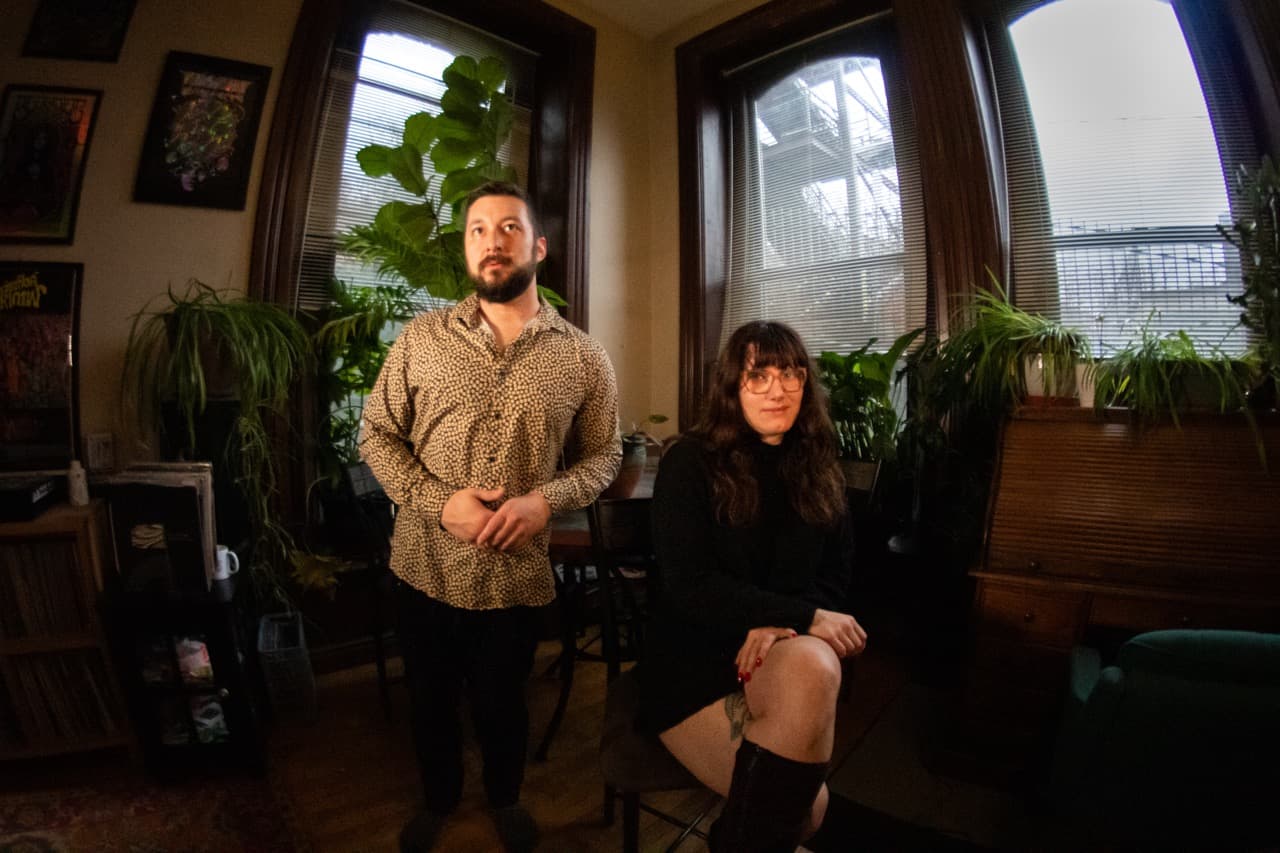
Brian Conway and Emma Riva
The Pittsburgh Manifold is the vessel that has been brought to life by that aforementioned spark of vitality. Composed of journalists, writers, and media professionals who have each garnered their own acclaim, this fresh news collective looks like the best possible contender to lead the way in local independent news reporting.
“I preach it all the time, how we need more support in journalism, we need more funding, whatever. But it’s also incumbent upon us to tell interesting, engaging, important stories to engage our audience and give them a reason to contribute,” says Conway, “If we’re trying to do something more grassroots and authentic, then we’re able to give people a platform that you wouldn’t otherwise know about ordinarily.”
“There are all these small, moderately successful news outlets in Pittsburgh… and we’re having a sort of like Yugoslavia breakup in Pittsburgh media, where everything is splintering,” says Riva, “I hope the Manifold is an opportunity for people to come together, even if they don’t write for (it) or anything… Part of why I became a journalist was because I want to be a writer but I also love to hang out. I hope the Manifold is able to capture the fun of being around people and other reporters and writers and editors, and that it becomes a little bit of a connector at a time when so many people feel displaced and sad.”
“I preach it all the time, how we need more support in journalism, we need more funding, whatever. But it’s also incumbent upon us to tell interesting, engaging, important stories to engage our audience and give them a reason to contribute,” says Conway, “If we’re trying to do something more grassroots and authentic, then we’re able to give people a platform that you wouldn’t otherwise know about ordinarily.”
“There are all these small, moderately successful news outlets in Pittsburgh… and we’re having a sort of like Yugoslavia breakup in Pittsburgh media, where everything is splintering,” says Riva, “I hope the Manifold is an opportunity for people to come together, even if they don’t write for (it) or anything… Part of why I became a journalist was because I want to be a writer but I also love to hang out. I hope the Manifold is able to capture the fun of being around people and other reporters and writers and editors, and that it becomes a little bit of a connector at a time when so many people feel displaced and sad.”
Deja Magazine is staffed almost solely by members of Gen Z – students and young adults, some with media career aspirations and others volunteer simply as an outlet for their personal passions. Comparatively, the landscape of Deja, in both staffing and coverage, is somewhat insular and low-stakes. After all, the bread and butter of any arts magazine is keeping up with the culture. Our archaic contemporaries are not so understanding in that regard, and there’s no better witness to attest to that than Abigail Hakas.
A multi-award winning journalist (including two Golden Quill awards) and now Managing Editor of the Latrobe Bulletin, Hakas is undoubtedly of the generation’s highest caliber of journalists, though her experience in the industry has been neither glamorous nor forgiving.
“It is grueling work, I won't lie to you. I, on average, work about double the hours I sleep in any given day. I drive an hour or two from my job every morning, every night. I’m making that drive right now. It takes a lot out of me. It takes a lot out of all of us. And it is hard to do that for a bad wage because you have to look at your retirement, if you're even able to save money,” says Hakas.
Journalism as a career has never been particularly lucrative. Every journalist is confronted with this fact when entering the field. In today’s landscape, any and all efforts to advance one’s career could fall flat in the face of unstable industry conditions. The fact that seniormost staff members of papers around the nation are being driven to strike should speak volumes.
“Reasonably, I've got ten years as a journalist before I cannot do it anymore physically or mentally – before I'm burnt out,” says Hakas, “Every journalist I respect, for the most part, has had that experience and has either pushed through it or left the industry, and I figure in those ten years I want to do something great. I want to really make a local paper good. I really want to make an impact. I want to do some work that means something to someone and it's a tough industry.”
A multi-award winning journalist (including two Golden Quill awards) and now Managing Editor of the Latrobe Bulletin, Hakas is undoubtedly of the generation’s highest caliber of journalists, though her experience in the industry has been neither glamorous nor forgiving.
“It is grueling work, I won't lie to you. I, on average, work about double the hours I sleep in any given day. I drive an hour or two from my job every morning, every night. I’m making that drive right now. It takes a lot out of me. It takes a lot out of all of us. And it is hard to do that for a bad wage because you have to look at your retirement, if you're even able to save money,” says Hakas.
Journalism as a career has never been particularly lucrative. Every journalist is confronted with this fact when entering the field. In today’s landscape, any and all efforts to advance one’s career could fall flat in the face of unstable industry conditions. The fact that seniormost staff members of papers around the nation are being driven to strike should speak volumes.
“Reasonably, I've got ten years as a journalist before I cannot do it anymore physically or mentally – before I'm burnt out,” says Hakas, “Every journalist I respect, for the most part, has had that experience and has either pushed through it or left the industry, and I figure in those ten years I want to do something great. I want to really make a local paper good. I really want to make an impact. I want to do some work that means something to someone and it's a tough industry.”

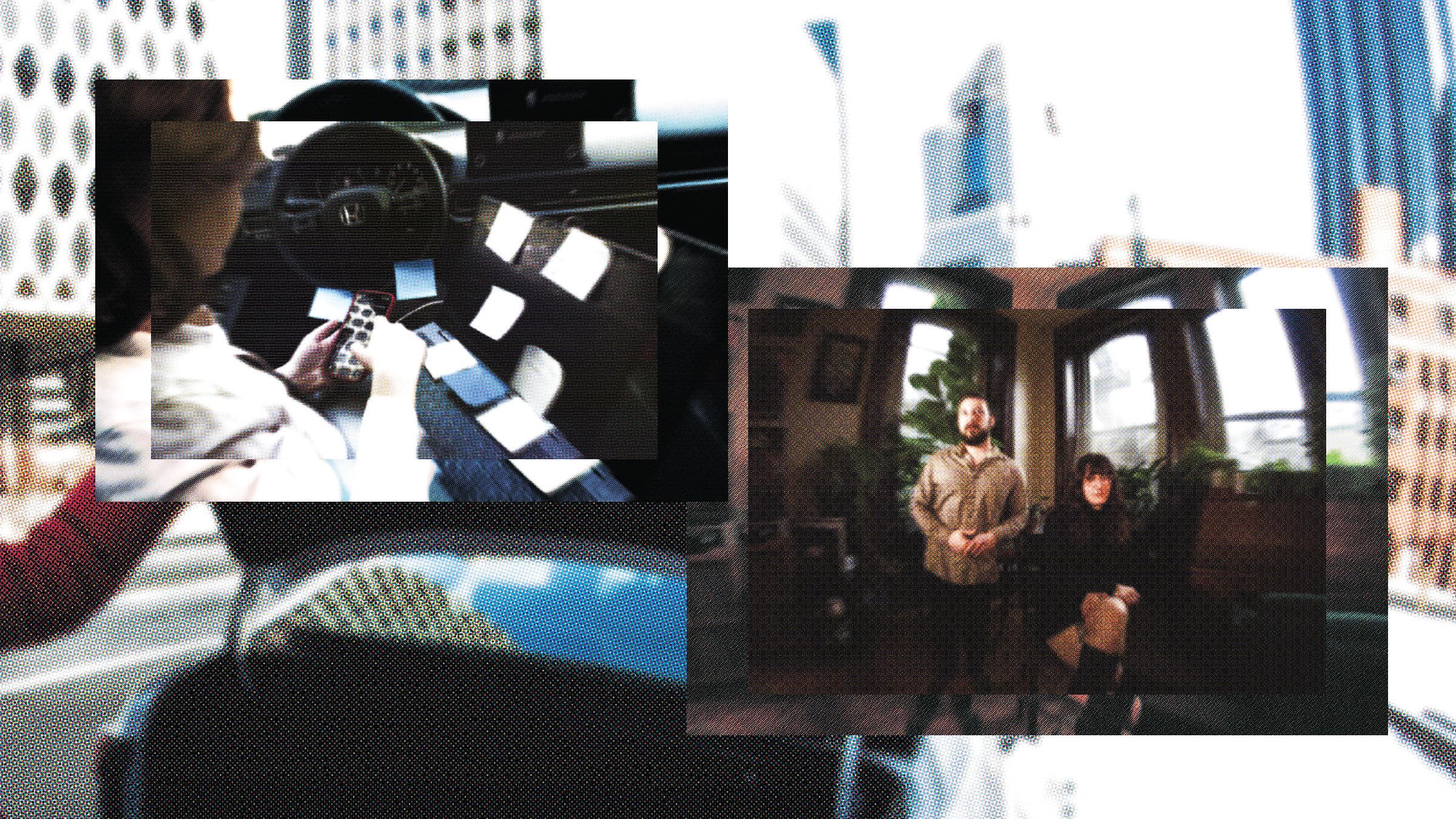
Abigail Hakas in her car, where she spends a lot of time on the commute and often works in.
This is a hard reality to reconcile for the new wave of media graduates, arriving on an empty battlefield. Unemployment rates for four-year-degree graduates have been slowly but steadily rising since the pandemic. Horror stories about the competitive job application cycle are almost comically abysmal, and the struggle doesn’t end after you receive your offer letter.
“I'm so constantly frustrated by this work. It's the greatest love of my life to do this work and it is the thing that causes me the most misery. I'm so frustrated with the lack of opportunities. I'm so frustrated with the opportunities that do exist. I'm so frustrated with even just the fundamental experience of being a journalist. I hate being the person that people are nervous to talk to because they know I'm going to ask hard questions. I hate being the one to call someone five times on their day off because I need an answer now. It is a frustrating job and it's even more so frustrating doing it this young,” says Hakas.
All hope for the industry is not lost, however. The nation treaded water while figuring out the future of media for the past decade, the early successes of alternative media is an indicator we’re about to hit our stride.
“I think the issue is that we haven't started to explore what alternative options look like until really these past few years,” says Hakas, “We're starting to have conversations with the people in the streets about this. I don't think they figured out the solution. I think it's because there isn't one solution. And I think fundamentally what it takes is something so fabulous and hard to measure, and I think it's care. I do think that you just have to care. It can work. I love my job.”
“I'm so constantly frustrated by this work. It's the greatest love of my life to do this work and it is the thing that causes me the most misery. I'm so frustrated with the lack of opportunities. I'm so frustrated with the opportunities that do exist. I'm so frustrated with even just the fundamental experience of being a journalist. I hate being the person that people are nervous to talk to because they know I'm going to ask hard questions. I hate being the one to call someone five times on their day off because I need an answer now. It is a frustrating job and it's even more so frustrating doing it this young,” says Hakas.
All hope for the industry is not lost, however. The nation treaded water while figuring out the future of media for the past decade, the early successes of alternative media is an indicator we’re about to hit our stride.
“I think the issue is that we haven't started to explore what alternative options look like until really these past few years,” says Hakas, “We're starting to have conversations with the people in the streets about this. I don't think they figured out the solution. I think it's because there isn't one solution. And I think fundamentally what it takes is something so fabulous and hard to measure, and I think it's care. I do think that you just have to care. It can work. I love my job.”
Doom seems to be top of mind for the world at large. The senile yellow serpent of traditional media hisses a feeble lament that its death will plunge the nation into chaos, all while blind to the new industry growing beneath it – one that will feed of the serpent’s flesh and grow up through the spaces between its bones. Bear witness.
We are called once again to the challenge every generation of Pittsburghers must face: Will we evolve without losing our identity? The refinement is at hand; the slag is burning and the crucible has been poured out into the mold. When all has been cooled and the constraints are broken off, will we crack and crumble before the nation into a pitiable heap of weak efforts and dreams unrealized? Or will we stand in awespiring resolve – a gleaming steel monument to the tenacity and enduring strength of the people of Pittsburgh. The choice is our very own, and ours alone.
We are called once again to the challenge every generation of Pittsburghers must face: Will we evolve without losing our identity? The refinement is at hand; the slag is burning and the crucible has been poured out into the mold. When all has been cooled and the constraints are broken off, will we crack and crumble before the nation into a pitiable heap of weak efforts and dreams unrealized? Or will we stand in awespiring resolve – a gleaming steel monument to the tenacity and enduring strength of the people of Pittsburgh. The choice is our very own, and ours alone.