


Seamus Quigley’s eyes drift aimlessly as he searches for the right words. Slightly obscured by his hair, which is in turn obscured by a pink beanie, they drift among his bandmates, to the ceiling of the Funhouse at Mr. Smalls, lingering, unfocused, thinking. He’s taking a cowboy class, he says, an English Lit class where they’re reading American Westerns.
Seamus plays guitar in PosterChild alongside Vanessa Prentiss, who doesn’t need to search for words. She does not speak much. She does not need to. She is not forceful. She smiles softly when looked at, speaks kindly when spoken to; what she says is respected. In every band, there is a person whose job it is to say when ideas are good and when ideas suck. In PosterChild, Vanessa says, Seamus is this arbiter of ideas. Vanessa’s opinion is met with nods of conviction and murmurs of agreement. The matter is settled.
Seamus seems mildly unaware of this.
“I wasn’t gonna say myself—”
“Everyone else knows it’s you,” a bandmate interjects, summoning further murmurs of agreement.
As many people do, Seamus becomes a bit sheepish and comedically self-effacing in response to attention.
“I don’t think I have…”
He pauses, starts again, this time with a grin.
“As far as music knowledge goes, uh, I don’t have that.”
Seamus plays guitar in PosterChild alongside Vanessa Prentiss, who doesn’t need to search for words. She does not speak much. She does not need to. She is not forceful. She smiles softly when looked at, speaks kindly when spoken to; what she says is respected. In every band, there is a person whose job it is to say when ideas are good and when ideas suck. In PosterChild, Vanessa says, Seamus is this arbiter of ideas. Vanessa’s opinion is met with nods of conviction and murmurs of agreement. The matter is settled.
Seamus seems mildly unaware of this.
“I wasn’t gonna say myself—”
“Everyone else knows it’s you,” a bandmate interjects, summoning further murmurs of agreement.
As many people do, Seamus becomes a bit sheepish and comedically self-effacing in response to attention.
“I don’t think I have…”
He pauses, starts again, this time with a grin.
“As far as music knowledge goes, uh, I don’t have that.”
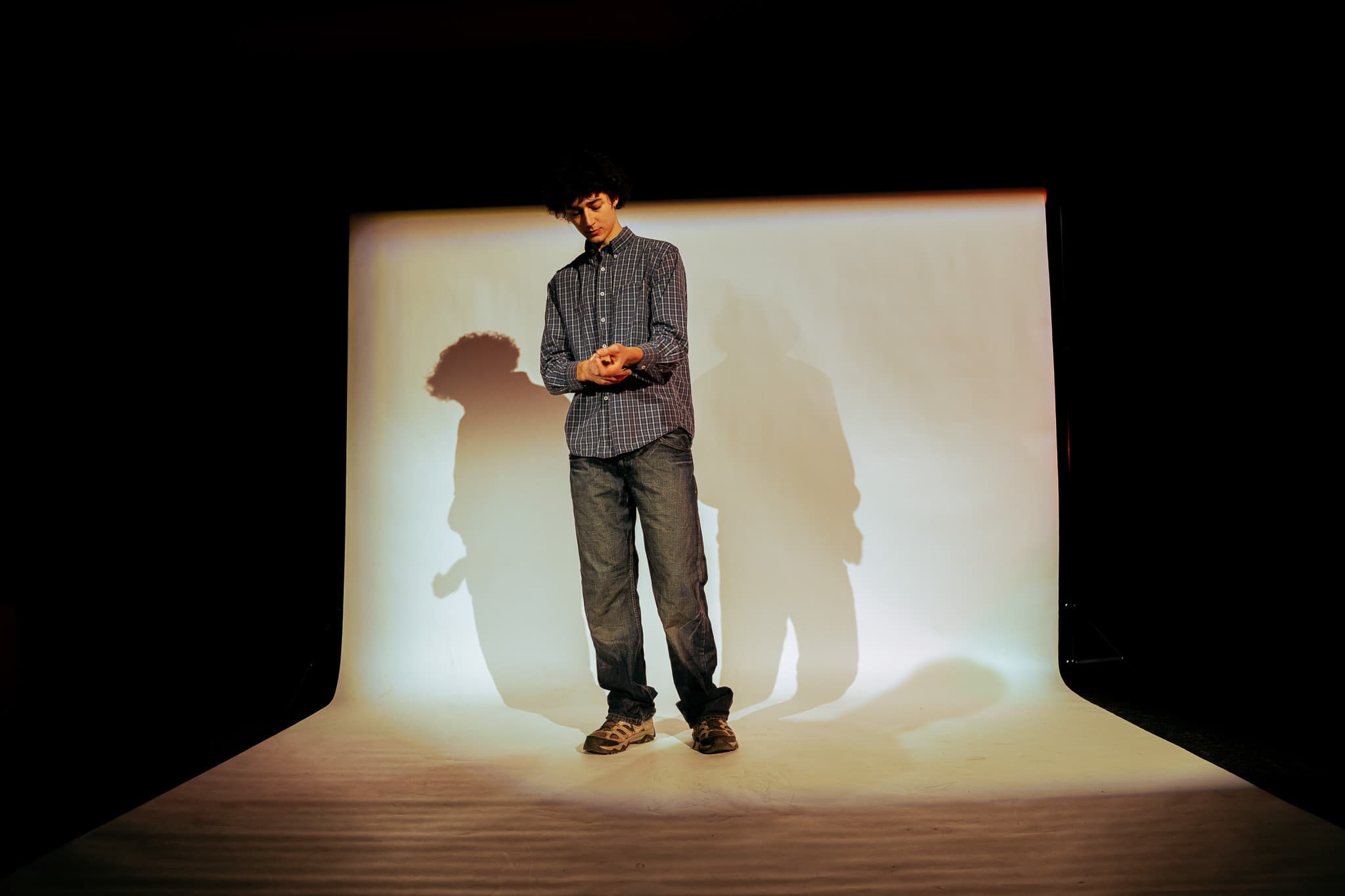
Gabe Escalante laughs the loudest in response to that statement. He is the bandmate that interjected. He is the bassist of PosterChild, and therefore not arbiter of ideas. However, he is like all of us, in that he has feelings that some things are good and feelings that some things suck. He is like fewer of us, though, in that he arrives upon his opinions gradually, and feels no need to share them with immediacy. Gabe deliberates upon his opinions for seven to ten business days, eventually delivering them in apartment hallways on a Tuesday night as dinner simmers on the front right burner.
“‘I Come Running Too,’” he says, the title of a song in progress.
“Yeah?” comes the response from his roommate, the songwriter.
“I don’t think people are going to understand it. No matter how much you like it, I think it’s gonna get lost in translation.”
“‘I Come Running Too,’” he says, the title of a song in progress.
“Yeah?” comes the response from his roommate, the songwriter.
“I don’t think people are going to understand it. No matter how much you like it, I think it’s gonna get lost in translation.”
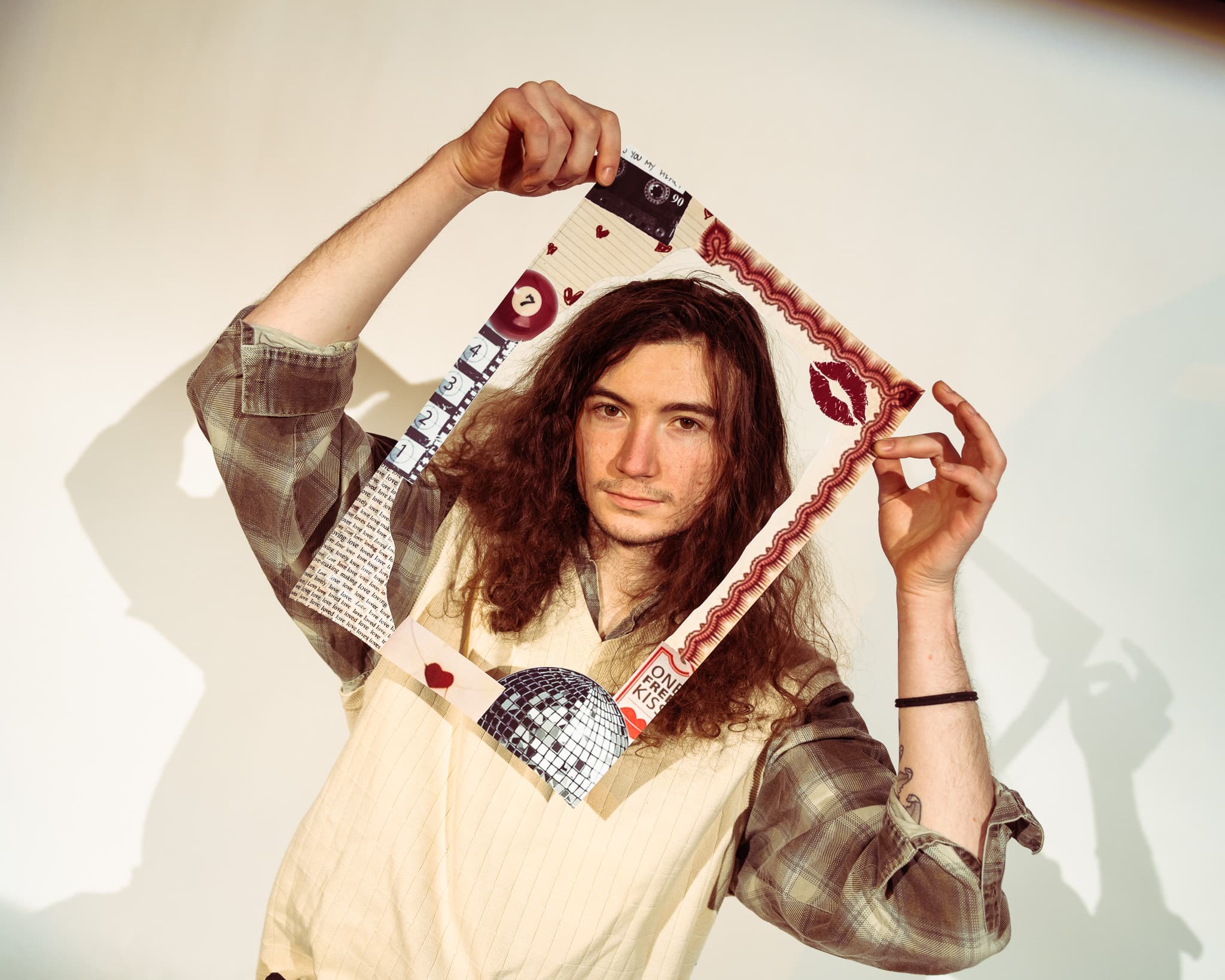
Aaron Kibler, the drummer, appears tuned out. As the band sits in a circle discussing the tracklist, he lets his mind wander. He slouches a bit, eyes a little glossy, hands occupied by nothing in particular. Appearances can be deceiving. At the mention of “I Come Running Too,” he snaps to life. “I fought so hard for that song,” he exclaims. “I fought so hard for it to be on the album. I still don’t know why it was cut.”
(Seamus, for his part, has no questions. “That is my least favorite song to listen to. I don’t know why you guys think it’s good. It will never, ever, in my head, sound good.”)
It is understood that Aaron’s brashness is not ill-mannered. His outburst, the straightening of his back, the focusing of his eyes, the sudden freeing of his hands, signal a gut instinct to a band deeply attuned to gut instincts. In another instance, he refuses to play the suggested part on “Sweating It Out.”
“I want something harder, a driving kick. It’s missing something in the bridge. It sounds dead.” The band runs it again; Aaron does what he wants — laissez-faire drumming economics. When it comes to songs, Seamus’s gut still comes out on top. “I Come Running Too” ultimately disappears from the tracklist. But the group trusts Aaron, and the rhythm market is left to regulate itself. “Sweating It Out” gets a driving kick in the bridge.
(Seamus, for his part, has no questions. “That is my least favorite song to listen to. I don’t know why you guys think it’s good. It will never, ever, in my head, sound good.”)
It is understood that Aaron’s brashness is not ill-mannered. His outburst, the straightening of his back, the focusing of his eyes, the sudden freeing of his hands, signal a gut instinct to a band deeply attuned to gut instincts. In another instance, he refuses to play the suggested part on “Sweating It Out.”
“I want something harder, a driving kick. It’s missing something in the bridge. It sounds dead.” The band runs it again; Aaron does what he wants — laissez-faire drumming economics. When it comes to songs, Seamus’s gut still comes out on top. “I Come Running Too” ultimately disappears from the tracklist. But the group trusts Aaron, and the rhythm market is left to regulate itself. “Sweating It Out” gets a driving kick in the bridge.

Gibson Musisko is the driving creative force of PosterChild, the frontman, Gabe’s roommate, and the author of every song — including the now-rejected “I Come Running Too.” He is happy to have identified the black sheep. “I thought about it. I thought about it for a couple weeks. Is he right? And then I listened to the demo I had again.” He laughs. “It was the weirdest song ever. I was like, ‘We can’t put this on the record.’”
Gibson deeply values people telling him he’s off his rocker. “I’m trying to write creatively and think of new ideas and push my boundaries, and then Seamus goes, ‘You’ve pushed too hard.’”
Seamus speaks up, ever comedic, ever correct. “Well, like, maybe the song would’ve sounded good to somebody who… understands music. But to me? Who doesn’t?” He pauses, gestures, clearly baffled. “It was unlistenable. It didn’t make sense in my head. So I didn’t know if it would make sense to our audience.”
Gibson deeply values people telling him he’s off his rocker. “I’m trying to write creatively and think of new ideas and push my boundaries, and then Seamus goes, ‘You’ve pushed too hard.’”
Seamus speaks up, ever comedic, ever correct. “Well, like, maybe the song would’ve sounded good to somebody who… understands music. But to me? Who doesn’t?” He pauses, gestures, clearly baffled. “It was unlistenable. It didn’t make sense in my head. So I didn’t know if it would make sense to our audience.”

As PosterChild sets up for soundcheck in the Funhouse, Gibson removes the layers of fleece Pittsburgh February demands, revealing a t-shirt that feels Keith Haring in spirit, letters intentionally doodled inside fluid constraints. i was sent from another world to work with people. Seamus, Vanessa, Gabe, and Aaron, yes, but one more name keeps popping up. Jake Hanner was the producer on the band’s new record, Leaving New Mexico.
“Jake is the biggest help we could’ve had,” says Aaron. Vanessa agrees.
“He’s the man,” says Gabe. Seamus agrees.
Gibson speaks effusively on Jake’s presence on Leaving New Mexico. Jake has a desire to understand Gibson’s creative goals. He gives Gibson the tools to realize those goals (“The synths Jake let us use…” one band member remarked, with a definite sense of wonder). He asks the right questions to lead Gibson towards realizing those goals. As they were recording “Shot In the Chest,” Jake stopped playback of a take and turned to the lead singer.
“What’s the point of this chorus?”
“Huh?”
“What do you see as the focal point? What is the central idea of this chorus?”
“The chants,” Gibson said. Jake continued pressing.
“So, everything else is auxiliary? Nothing else matters here?”
Gibson thought for a second, then slowly started nodding. “Yeah,” he said. “Yeah, yeah.”
Jake also brings an outsider’s viewpoint, and with it a clarity of mind. Go and listen to Leaving New Mexico. Twelve tracks, forty minutes. You won’t find the title phrase anywhere in the runtime, and that’s because Jake cut it. PosterChild were laboring in the studio. They laid down take after take after take of the title track, trying different things, rewriting parts, adjusting structures. Take after take after take, and all of them sucked, but it’s the title track, so just one more take, just one more tweak, anything to make it work. Jake, removed from the creative fervor, was the voice of reason. They didn’t have the budget. They didn’t have the time. The title track had to go.
Gibson looked around the room. “Are we cutting the song?”
Everybody stared at each other.
“I guess we have to,” came the response.
But before he’s even finished recounting the story, Gibson cuts himself off.
“And you know what? Jake was right. The album would’ve sucked if that song was on it, honestly.”
“Jake is the biggest help we could’ve had,” says Aaron. Vanessa agrees.
“He’s the man,” says Gabe. Seamus agrees.
Gibson speaks effusively on Jake’s presence on Leaving New Mexico. Jake has a desire to understand Gibson’s creative goals. He gives Gibson the tools to realize those goals (“The synths Jake let us use…” one band member remarked, with a definite sense of wonder). He asks the right questions to lead Gibson towards realizing those goals. As they were recording “Shot In the Chest,” Jake stopped playback of a take and turned to the lead singer.
“What’s the point of this chorus?”
“Huh?”
“What do you see as the focal point? What is the central idea of this chorus?”
“The chants,” Gibson said. Jake continued pressing.
“So, everything else is auxiliary? Nothing else matters here?”
Gibson thought for a second, then slowly started nodding. “Yeah,” he said. “Yeah, yeah.”
Jake also brings an outsider’s viewpoint, and with it a clarity of mind. Go and listen to Leaving New Mexico. Twelve tracks, forty minutes. You won’t find the title phrase anywhere in the runtime, and that’s because Jake cut it. PosterChild were laboring in the studio. They laid down take after take after take of the title track, trying different things, rewriting parts, adjusting structures. Take after take after take, and all of them sucked, but it’s the title track, so just one more take, just one more tweak, anything to make it work. Jake, removed from the creative fervor, was the voice of reason. They didn’t have the budget. They didn’t have the time. The title track had to go.
Gibson looked around the room. “Are we cutting the song?”
Everybody stared at each other.
“I guess we have to,” came the response.
But before he’s even finished recounting the story, Gibson cuts himself off.
“And you know what? Jake was right. The album would’ve sucked if that song was on it, honestly.”

In 1966, John Lennon said in an interview with The London Standard that Christianity was on the outs. It would vanish and shrink, and in fact, the Beatles were bigger than Jesus. In 2026, PosterChild released the lead single for Leaving New Mexico, “Michael’s Sword,” retelling a scene from the Book of Revelations which sees the Archangel Michael slaying Lucifer in serpent form as the nonbelievers look on from the ruins of the earth following the second coming of Christ. PosterChild, it seems, are not bigger than Jesus.
Gibson sees a loose narrative in Leaving New Mexico. He sees a hero’s journey where the revelation comes not in vanquishing enemies, but in choosing not to vanquish them, and in choosing to journey back home instead. And within that narrative lies “Michael’s Sword,” an outpouring of anger as the hero grapples with a sense of complicity in not choosing to exercise that agency earlier, channeled via Messianic allegory. Gibson knows this.
“Jesus was a great dude. I think he was a really great dude, if he was real. And I’d love it if he was, because the idea that the goodness that he did echoed through time would make things a lot brighter. People desperately, in times like today, need something to put their faith in that isn’t themselves. I think it’s very important for people to believe in something. Hopelessness is abundant, and hope is not….that the unbelievers look on in horror as the giant Archangel slays the dragon, knowing they still have to suffer on this razed earth even as evil is defeated, is a criticism that God would create us only to leave us to live in horrors.”
Gibson sees a loose narrative in Leaving New Mexico. He sees a hero’s journey where the revelation comes not in vanquishing enemies, but in choosing not to vanquish them, and in choosing to journey back home instead. And within that narrative lies “Michael’s Sword,” an outpouring of anger as the hero grapples with a sense of complicity in not choosing to exercise that agency earlier, channeled via Messianic allegory. Gibson knows this.
“Jesus was a great dude. I think he was a really great dude, if he was real. And I’d love it if he was, because the idea that the goodness that he did echoed through time would make things a lot brighter. People desperately, in times like today, need something to put their faith in that isn’t themselves. I think it’s very important for people to believe in something. Hopelessness is abundant, and hope is not….that the unbelievers look on in horror as the giant Archangel slays the dragon, knowing they still have to suffer on this razed earth even as evil is defeated, is a criticism that God would create us only to leave us to live in horrors.”

In the lead singer’s personal visualization of the story, the hero is a government agent. This agent lives in an alternate America — one where the Cold War became hot — and he has spent his whole life believing in the cause. Even as America tears the world apart, dooming itself to the rubble it creates, he believes in his righteousness. And when the work is done, he returns home to his family, only to be called upon again. And as he ventures out into what’s left of the world, he comes to terms with his life being built on a lie, and as much as he wants to believe in his duty, he abandons his country and returns home to his family.
However, Leaving New Mexico is the work of the band, and the band rejects any visualization as being definitive. Specificity is not the point. Leaving New Mexico is monomythical because the monomyth is universal, and the monomyth is eternal. Anyone can pick from its branches, and every picking can propagate into new fruit. Vanessa rocks back and forth, leaning against the wall, thinking.
“I’ve played the songs so many times that they have their own symbolism to me. It’s the same as somebody listening to the songs, but it’s much closer to me…I’m up there and I’m playing it and I’m expressing myself through these songs that he wrote.”
Gibson agrees. He believes in death of the author. He doesn’t care about being right. “The point is for it to end up in someone else’s hands, right? That’s a lot more exciting to me than whatever I said.”
The band turns to Seamus. He crosses his arms and frowns. He adjusts his beanie, lets his eyes drift upwards, tracing the dark wood paneling until it meets speckled, neutral drywall. He’s taking a cowboy class, he says, an English Lit class where they’re reading American Westerns.
If there is any person whose opinions are definitive within PosterChild, it’s Seamus’s. He is the arbiter of ideas, and it’s easy to imagine his cowboy class becoming a witty, insightful, profoundly personal realization of the hero’s journey. But it’s Friday night in the Funhouse at Mr. Smalls, and a stagehand interrupts the discussion. It’s PosterChild’s turn to soundcheck, and off the band goes, leaving Seamus’s cowboy thoughts unfinished. Specificity, the universe says with one eye closed, is not the point.
However, Leaving New Mexico is the work of the band, and the band rejects any visualization as being definitive. Specificity is not the point. Leaving New Mexico is monomythical because the monomyth is universal, and the monomyth is eternal. Anyone can pick from its branches, and every picking can propagate into new fruit. Vanessa rocks back and forth, leaning against the wall, thinking.
“I’ve played the songs so many times that they have their own symbolism to me. It’s the same as somebody listening to the songs, but it’s much closer to me…I’m up there and I’m playing it and I’m expressing myself through these songs that he wrote.”
Gibson agrees. He believes in death of the author. He doesn’t care about being right. “The point is for it to end up in someone else’s hands, right? That’s a lot more exciting to me than whatever I said.”
The band turns to Seamus. He crosses his arms and frowns. He adjusts his beanie, lets his eyes drift upwards, tracing the dark wood paneling until it meets speckled, neutral drywall. He’s taking a cowboy class, he says, an English Lit class where they’re reading American Westerns.
If there is any person whose opinions are definitive within PosterChild, it’s Seamus’s. He is the arbiter of ideas, and it’s easy to imagine his cowboy class becoming a witty, insightful, profoundly personal realization of the hero’s journey. But it’s Friday night in the Funhouse at Mr. Smalls, and a stagehand interrupts the discussion. It’s PosterChild’s turn to soundcheck, and off the band goes, leaving Seamus’s cowboy thoughts unfinished. Specificity, the universe says with one eye closed, is not the point.