

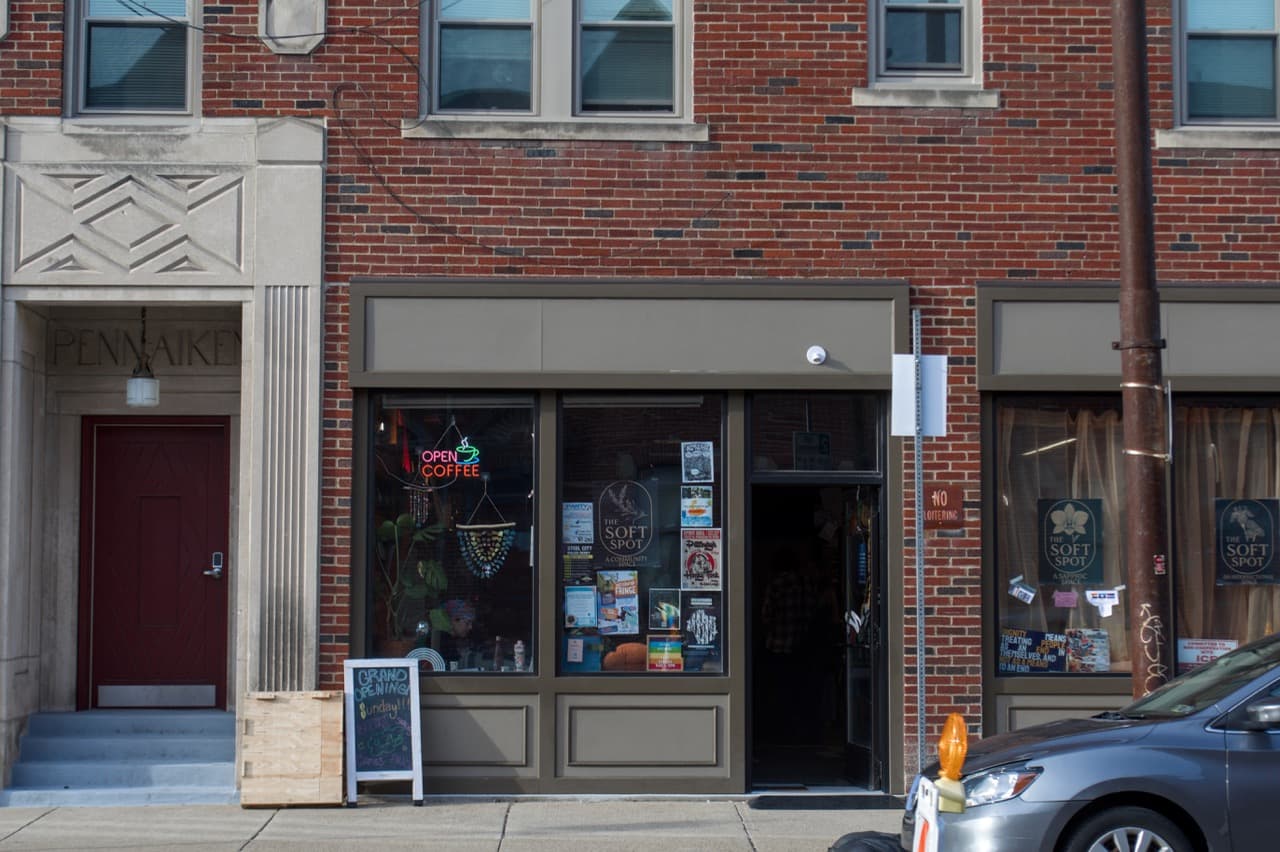
Amidst the discrimination faced by LGBTQ+ individuals throughout history, Pittsburgh’s queer community has continuously built spaces for resilience, joy, creative expression, and connectivity despite fear and uncertainty. In our current landscape where queer rights are facing increased risks, a place like The Soft Spot is as necessary now as ever. Aerin and Samm Adams-Fuchs are head organizers of this late-night sapphic coffee shop opening at the end of December in the heart of Garfield. They share how the space will be a haven for Pittsburgh’s underrepresented queer communities.
“I think it’s kind of every lesbian’s dream to open up a coffee shop or book store that sells flowers and has community events,” says Aerin. “Every time we tell someone about it they’re like, ‘Oh, so basically just like my dream.’ Yes, it's our collective dream that this space exists.”
The decision to create The Soft Spot came to Aerin in a moment of uncertainty about her future career path. After being caught up in a round of layoffs at Meta this past April, she dedicated herself to work that would prioritize her local community.
“I think it’s kind of every lesbian’s dream to open up a coffee shop or book store that sells flowers and has community events,” says Aerin. “Every time we tell someone about it they’re like, ‘Oh, so basically just like my dream.’ Yes, it's our collective dream that this space exists.”
The decision to create The Soft Spot came to Aerin in a moment of uncertainty about her future career path. After being caught up in a round of layoffs at Meta this past April, she dedicated herself to work that would prioritize her local community.
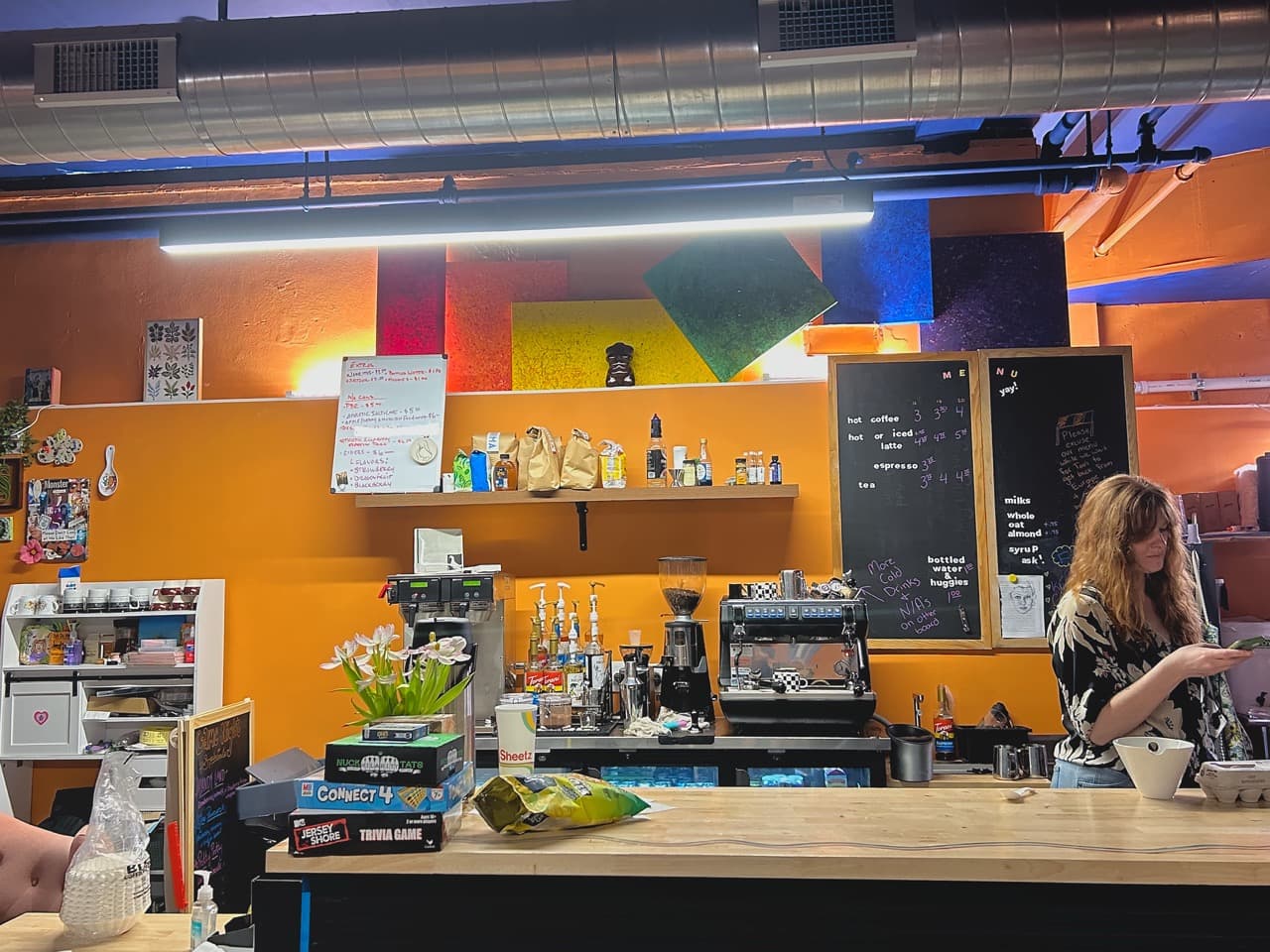
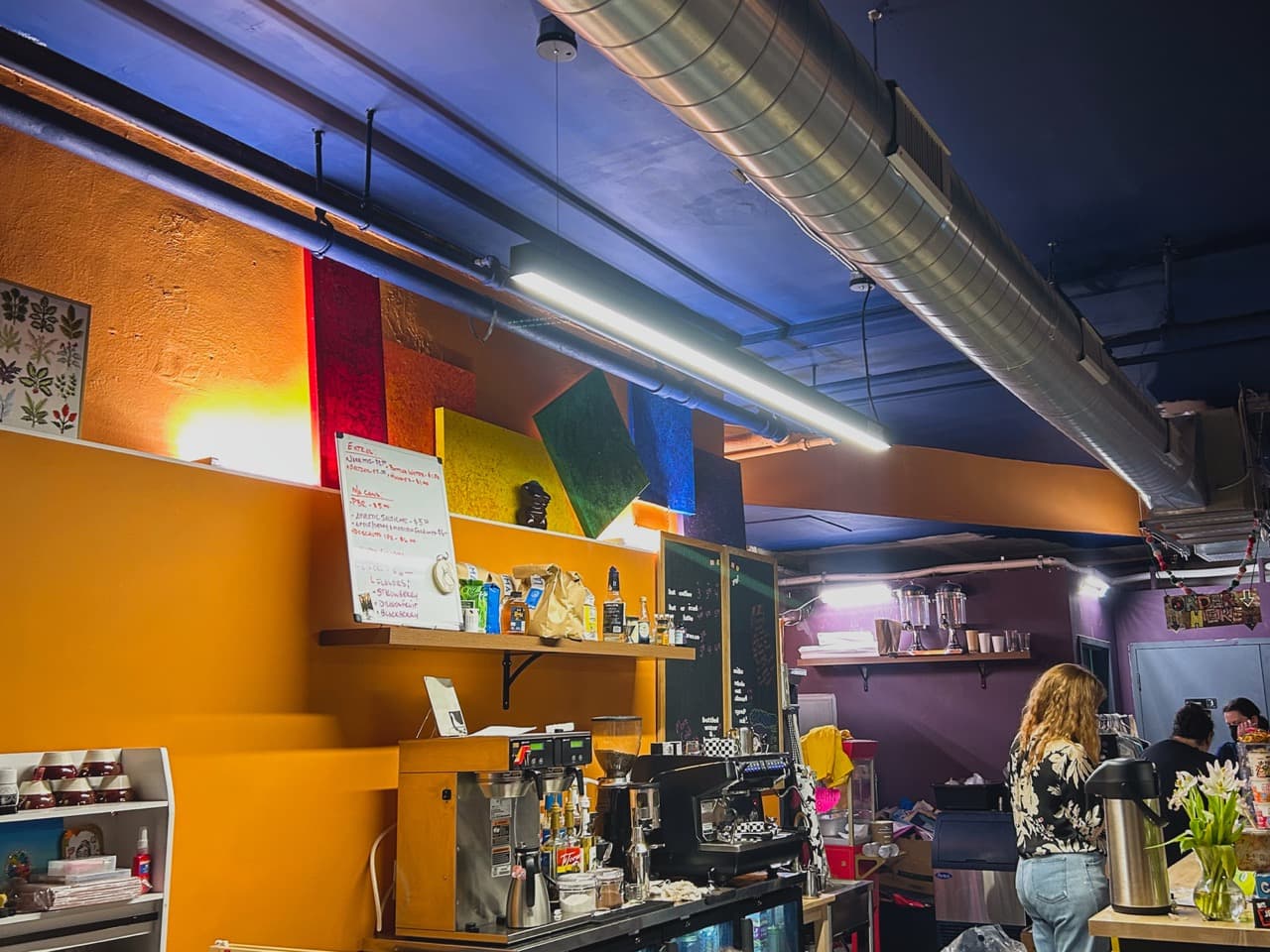
“I realized that with my experience up to that point, I only had the option of moving into another corporate structure and giving more of my energy to people that are actively destroying our planet and community,” says Aerin. “I looked at Samm one night and said, ‘Would you still love me if I opened a coffee shop instead of going back to work?’ She said, ‘Alright, what’s it called?’ If that hadn’t been the response I don’t know where we’d be now.”
Many of the permanent queer third spaces in Pittsburgh, like 5801, Blue Moon, and P-Town, are centered around nightlife. These businesses offer a meaningful space of connection for many in the queer community, but there is a lack of designated spaces for those who are sober, and younger and older queer generations.
On why it’s important that The Soft Spot is a sober space, Aerin says, “There are a couple of bonuses, the one being intergenerationality. Think of the last time you had a conversation with a lesbian or gay man over the age of 40. There’s not a space that older queer people are coming to because the queer spaces we do have—they are incredible and so important—are centered around alcohol, usually very loud, and the majority of the activities start late at night. They are also completely inaccessible to anybody under the age of 21.”
She continues, “There’s such a value in being a young queer person and seeing older queer people alive. They don't even have to be thriving, wealthy, or successful. Just to see that they exist.”
Many of the permanent queer third spaces in Pittsburgh, like 5801, Blue Moon, and P-Town, are centered around nightlife. These businesses offer a meaningful space of connection for many in the queer community, but there is a lack of designated spaces for those who are sober, and younger and older queer generations.
On why it’s important that The Soft Spot is a sober space, Aerin says, “There are a couple of bonuses, the one being intergenerationality. Think of the last time you had a conversation with a lesbian or gay man over the age of 40. There’s not a space that older queer people are coming to because the queer spaces we do have—they are incredible and so important—are centered around alcohol, usually very loud, and the majority of the activities start late at night. They are also completely inaccessible to anybody under the age of 21.”
She continues, “There’s such a value in being a young queer person and seeing older queer people alive. They don't even have to be thriving, wealthy, or successful. Just to see that they exist.”
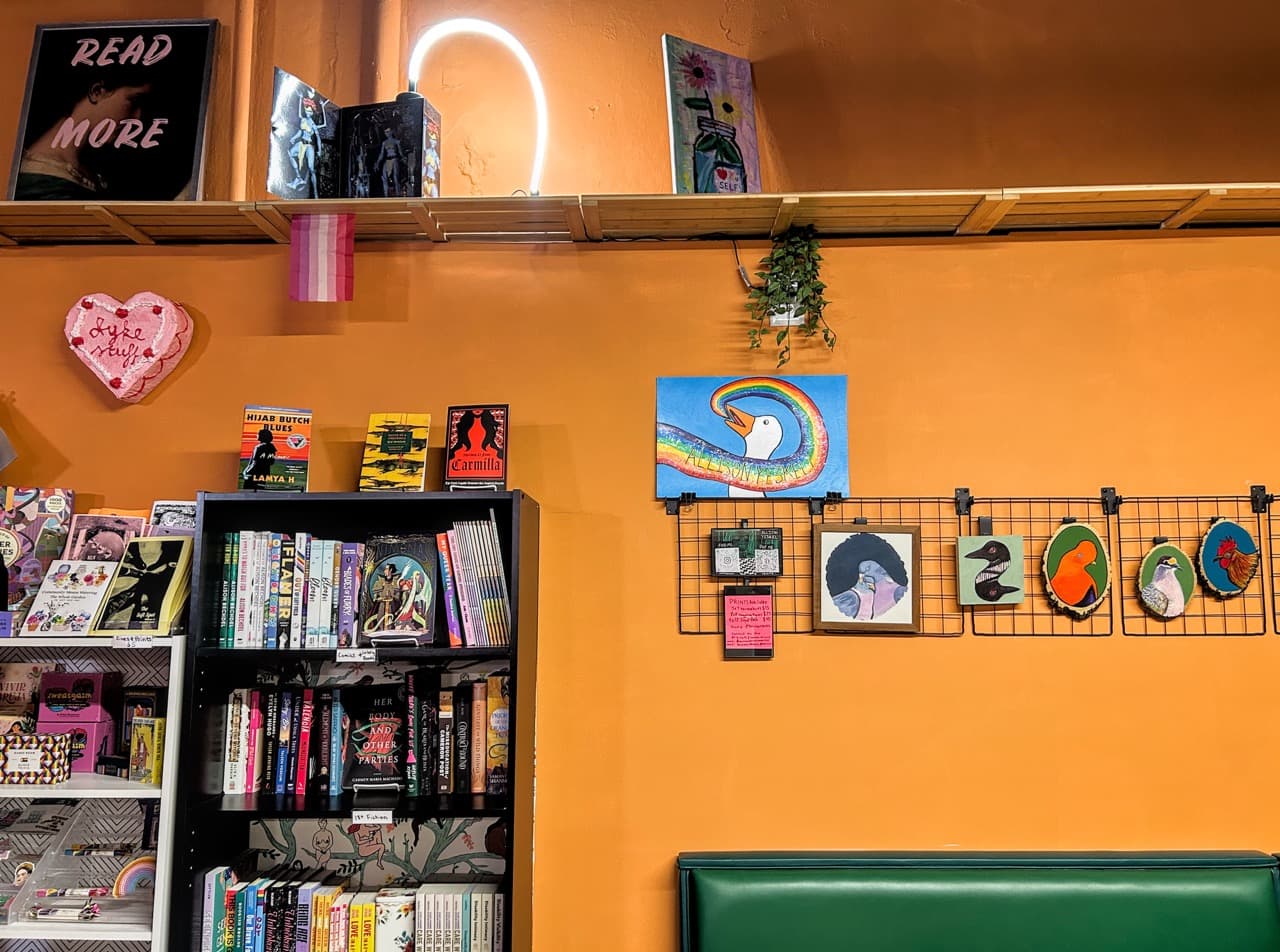
The Soft Spot is also unique in its designation as a sapphic space, an identity often underrepresented in queer spaces. Samm explains, “There's rarely been an attempt to use the label of ‘sapphic space’ or back when there was it was very lesbian heavy. It kind of excluded trans, non-binary, and many other people that fell under the sapphic umbrella.”
Previous sapphic spaces would often “fall off because they didn't have that organization, management, programming, or community goal,” according to Samm. “It’s been tried so many times in Pittsburgh but without follow through. We’re gonna do it this time. It’s gonna happen,” she says.
Despite the overwhelming acceptance of all identities in queer spaces, there can still be exclusivity and judgement on which identities belong in which space. The Soft Spot hopes to bridge these gaps.
“I think that bisexual, pansexual, aro, and ace identifying women and nonbinary people often feel that they’re interrupting or taking up space that doesn’t belong to them. That sucks,” explains Aerin. “The term lesbian feels exclusionary for a lot of people. We want people to know that they're not taking up space. This is a space that was made for you.”
The Soft Spot is committed to cultivating a space of non-exclusivity, Aerin emphasizes, “Even if you’re straight and married or in a straight appearing relationship. Even if you’ve never kissed a girl before. We want you to feel like you can walk in with your boyfriend and still belong there and if you break up and walk in with your girlfriend, nobody is going to be like, ‘Oh you’ve changed.’ Sexuality is fluid and beautiful.”
The preparation and labor to open the space isn’t a task that Aerin and Samm are tackling alone. They’ve been receiving continuous support from neighboring queer-owned and queer-friendly businesses in Garfield such as Two Frays, Leona’s, Workshop PGH, and The Black Cat Market.
“The community of Garfield is incredible. We never have a day where we are working in the shop and at least one person doesn’t come to help in some way,” says Aerin. “The business owners are all human beings that live here. It’s so positive and we’re so freaking excited. People want to see their community thrive and survive here, and you don't feel that everywhere.”
An essential effort in building their brand is supporting other local businesses. For example, The Soft Spot will serve La Prima coffee in mugs provided by Penn Fixture, sell food from Pigeon Bagels and Evanly Bakes, and decorate the walls with artwork from Kindred Spirit.
“Every time we buy from them, we are putting money back into Pittsburghers’ pockets,” says Aerin. They’ve also received support from local artists like Jen Cooney, who “has been like I’ll come there and paint your walls, I'll make you a mural.”
Many of the activities and events that are planned to be held in The Soft Spot are “connective activities through art and expression,” says Aerin.
She continues, “We have a stage so we can host open mics, acoustic artists, and let people express themselves through art. We have craft nights already planned. We also have a little space we’re calling ‘Mini Mainstreet’ which is a collection of six large squares and each one is going to be a different business or a different artist that wants to host in the space. It’s a way for people who can't afford a storefront to be able to showcase their art.”
Previous sapphic spaces would often “fall off because they didn't have that organization, management, programming, or community goal,” according to Samm. “It’s been tried so many times in Pittsburgh but without follow through. We’re gonna do it this time. It’s gonna happen,” she says.
Despite the overwhelming acceptance of all identities in queer spaces, there can still be exclusivity and judgement on which identities belong in which space. The Soft Spot hopes to bridge these gaps.
“I think that bisexual, pansexual, aro, and ace identifying women and nonbinary people often feel that they’re interrupting or taking up space that doesn’t belong to them. That sucks,” explains Aerin. “The term lesbian feels exclusionary for a lot of people. We want people to know that they're not taking up space. This is a space that was made for you.”
The Soft Spot is committed to cultivating a space of non-exclusivity, Aerin emphasizes, “Even if you’re straight and married or in a straight appearing relationship. Even if you’ve never kissed a girl before. We want you to feel like you can walk in with your boyfriend and still belong there and if you break up and walk in with your girlfriend, nobody is going to be like, ‘Oh you’ve changed.’ Sexuality is fluid and beautiful.”
The preparation and labor to open the space isn’t a task that Aerin and Samm are tackling alone. They’ve been receiving continuous support from neighboring queer-owned and queer-friendly businesses in Garfield such as Two Frays, Leona’s, Workshop PGH, and The Black Cat Market.
“The community of Garfield is incredible. We never have a day where we are working in the shop and at least one person doesn’t come to help in some way,” says Aerin. “The business owners are all human beings that live here. It’s so positive and we’re so freaking excited. People want to see their community thrive and survive here, and you don't feel that everywhere.”
An essential effort in building their brand is supporting other local businesses. For example, The Soft Spot will serve La Prima coffee in mugs provided by Penn Fixture, sell food from Pigeon Bagels and Evanly Bakes, and decorate the walls with artwork from Kindred Spirit.
“Every time we buy from them, we are putting money back into Pittsburghers’ pockets,” says Aerin. They’ve also received support from local artists like Jen Cooney, who “has been like I’ll come there and paint your walls, I'll make you a mural.”
Many of the activities and events that are planned to be held in The Soft Spot are “connective activities through art and expression,” says Aerin.
She continues, “We have a stage so we can host open mics, acoustic artists, and let people express themselves through art. We have craft nights already planned. We also have a little space we’re calling ‘Mini Mainstreet’ which is a collection of six large squares and each one is going to be a different business or a different artist that wants to host in the space. It’s a way for people who can't afford a storefront to be able to showcase their art.”
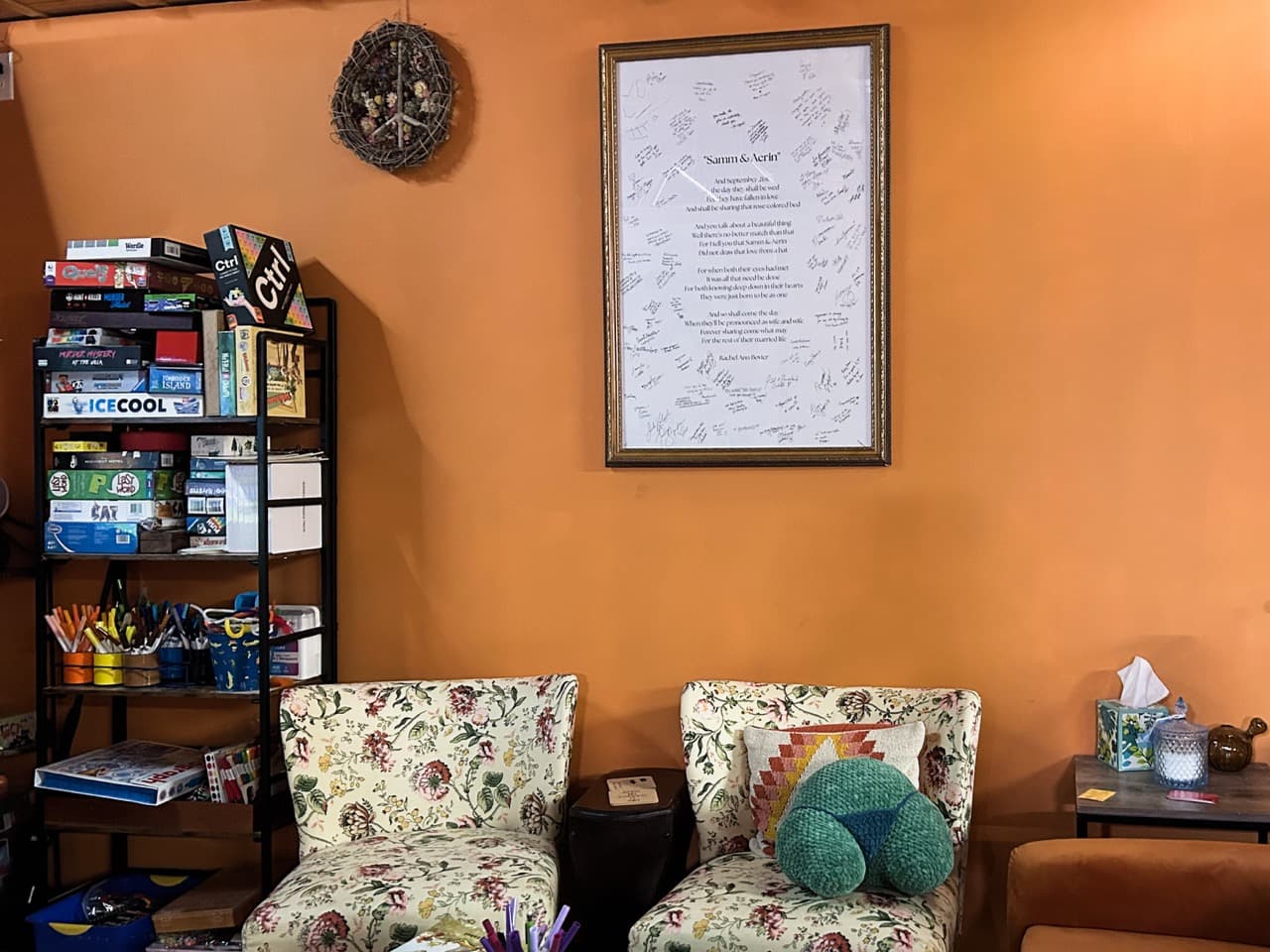
The queer community’s contributions to Pittsburgh’s art scene is invaluable and The Soft Spot hopes to establish itself as a creative hub. As Aerin explains, there’s something incredibly meaningful about tapping into your creative mind with others in your community.
“I don't feel as connected or at ease with anybody as much as I do when I am sitting next to them making something,” she says. “I have the opportunity to express myself while they are expressing themselves.”
Even though the idea for The Soft Spot originated from the minds of two individuals, it soon became a communal endeavor, and the web of ownership of the space expanded. Samm explains that it was necessary to sacrifice complete control over the space.
“Pittsburgh as a community has shown up for us when we were prepared to do it on our own,” says Samm. “But Pittsburgh said ‘No, you don't have to.’ It was very surprising and hard to accept.”
Instead of feeling that they are walking into someone else’s space, Aerin and Samm want people to walk into The Soft Spot and feel like they are a part of it.
“There are going to be people that walk into the space and be like, ‘That’s the part of the ceiling that I painted, that’s the painting that I hung, that’s the tile that I put on the floor.’ It gives a sense of ownership to so many people,” says Aerin. “We want people to walk in and feel at home, feel wanted, and feel ownership.”
The Soft Spot is also collaborating with other queer groups in Pittsburgh to offer a platform for queer oral history, especially centering voices from the older queer population.
The Persad Center hosts weekly meetings for older queer people called The Owls. Aerin explains, “They want to do a speaker series at The Soft Spot where they talk about their experiences being queer in Pittsburgh throughout the 70s, 80s, and 90s. They want people to meet them and ask questions.”
The intergenerationality of the space will not only help build relationships between people within the queer community, but also center the importance of long-term queer existence.
“Just being able to see yourself as an older person, it’s a sense of inspiration, safety, and suicide prevention,” says Aerin. “Just talking to queer people that are older gives us a sense of how far we’ve come, and gives us a sense of hope. Right now it’s really hard to feel any sort of hope.”
Aerin speaks upon the importance of acknowledging queer rights and experience over time, and how listening and centering older queer populations in queer spaces can help us build stronger, more resilient, and caring communities.
“They lived through times where they had to put specific items on their bodies in specific places to communicate their queerness in secret to other people,” says Aerin. “Whereas me, I’m able to walk around with buttons on my purse that say ‘I’m gay.’ That wasn’t an option for them growing up. We need to have those reminders of hope, but also know those warning signs that things are tough.”
The resilience of queer spaces such as The Soft Spot are necessitated by the past and present violence and discrimination faced by the queer community. In addition to being a space for joy, it is also a space that offers a support system during times of struggle.
“If the warnings are not being communicated from generation to generation, we’re going to make the Samme mistakes that were made before. Not because we’re stupid, they weren't stupid then, but because we don't have access to learn from our history because our history isn't documented. Our history wasn’t taught to us in school. We have an oral history. That’s all we’ve had,” says Aerin.
Small acts of kindness and connection are crucial during moments of collective fear. As Aerin says, “It’s tough to live through this space and not have somebody standing next to you being like, ‘We’ve been here before, we're gonna get through this. But in the meantime, here's my soup recipe.’”
Not only will The Soft Spot bridge gaps between younger and older queer generations, but also between different queer subcultures.
“Just within our own friend group we have queers that fit into very specific pockets and there's not a lot of intermingling between the groups,” says Aerin. “Some of that comes from the exclusivity of the lesbian community versus the gay men community versus the generally socially queer community. I would love to see the strength that would come from some of those groups healing.”
The range of activities within the space will allow queer groups with different interests to interact, “Like, if you’re usually a smoking outside the Rock Room queer, you’re able to walk through and see Sammeness with the people sitting at the crafting and puzzling table,” says Aerin. “I feel there is so much more that we all have in common than we have that’s different.”
When the opening of The Soft Spot began to take longer than Aerin and Samm had anticipated, they asked themselves, “How can we exist in the community right now?” The answer was The Soft Spot’s very own zine.
“I’m from Nebraska, so the zine was actually inspired by the county minutes which was this little booklet that would be on diner tables,” explains Aerin on her inspiration for the zine. “It would have ads from local community organizations, sports news from local teams, and highlights of people turning 50. It was like your community on the table. When we imagined the cafe, I wanted one of those on every table but I wanted it to be the queer version.”
The zine currently has three volumes, with its most recent issue featuring poems submitted by the community, mocktail recipes, reviews on local queer bands, queer history of the carabiner, and a list of sapphic events happening that month.
“I want people to have that connection to the queer community and be able to see themselves in something,” says Aerin. “Let’s start giving people a place to own things, make art, be in existence together, and let’s put that out into the universe. When people come in, they can access the zines, submit to them, and see themselves in print which is very validating as an artist. To be like, ‘That's my poem. I made that and other people get to consume it.’”
Being a “soft” space is at the center of the cafe’s philosophy. Aerin and Samm’s friend came up with the distinct name and logo, a drawing of an orchid.
“She’s like, ‘It's a soft space, a space for people to come and be queer but it's not loud, overwhelming, and alcohol focused.’ I was like I love it, and the little tongue in cheek acknowledgement of the softness of the human form.”
Within a soft space, Aerin says that queer people “don't have to be guarded or ready for the next punch that's coming when they walk down the street.” She continues, “They can be goofy and silly and soft in this space. So much of our queer community has to keep very tight and very ready. Even in a place like Pittsburgh which is so much more queer friendly than a lot of the rest of the country.”
The lack of permanent sapphic centered spaces is felt not only by many in Pittsburgh, but in cities throughout the country. The Soft Spot is committed to fill this gap. Whether creating a piece of art, learning about an older queer’s life over a cup of coffee, or joining a book club, it’s a space that will offer something for everyone.
You can follow their Instagram, @thesoftspotpgh (https://www.instagram.com/thesoftspotpgh/), to stay in the loop on upcoming events.
“I don't feel as connected or at ease with anybody as much as I do when I am sitting next to them making something,” she says. “I have the opportunity to express myself while they are expressing themselves.”
Even though the idea for The Soft Spot originated from the minds of two individuals, it soon became a communal endeavor, and the web of ownership of the space expanded. Samm explains that it was necessary to sacrifice complete control over the space.
“Pittsburgh as a community has shown up for us when we were prepared to do it on our own,” says Samm. “But Pittsburgh said ‘No, you don't have to.’ It was very surprising and hard to accept.”
Instead of feeling that they are walking into someone else’s space, Aerin and Samm want people to walk into The Soft Spot and feel like they are a part of it.
“There are going to be people that walk into the space and be like, ‘That’s the part of the ceiling that I painted, that’s the painting that I hung, that’s the tile that I put on the floor.’ It gives a sense of ownership to so many people,” says Aerin. “We want people to walk in and feel at home, feel wanted, and feel ownership.”
The Soft Spot is also collaborating with other queer groups in Pittsburgh to offer a platform for queer oral history, especially centering voices from the older queer population.
The Persad Center hosts weekly meetings for older queer people called The Owls. Aerin explains, “They want to do a speaker series at The Soft Spot where they talk about their experiences being queer in Pittsburgh throughout the 70s, 80s, and 90s. They want people to meet them and ask questions.”
The intergenerationality of the space will not only help build relationships between people within the queer community, but also center the importance of long-term queer existence.
“Just being able to see yourself as an older person, it’s a sense of inspiration, safety, and suicide prevention,” says Aerin. “Just talking to queer people that are older gives us a sense of how far we’ve come, and gives us a sense of hope. Right now it’s really hard to feel any sort of hope.”
Aerin speaks upon the importance of acknowledging queer rights and experience over time, and how listening and centering older queer populations in queer spaces can help us build stronger, more resilient, and caring communities.
“They lived through times where they had to put specific items on their bodies in specific places to communicate their queerness in secret to other people,” says Aerin. “Whereas me, I’m able to walk around with buttons on my purse that say ‘I’m gay.’ That wasn’t an option for them growing up. We need to have those reminders of hope, but also know those warning signs that things are tough.”
The resilience of queer spaces such as The Soft Spot are necessitated by the past and present violence and discrimination faced by the queer community. In addition to being a space for joy, it is also a space that offers a support system during times of struggle.
“If the warnings are not being communicated from generation to generation, we’re going to make the Samme mistakes that were made before. Not because we’re stupid, they weren't stupid then, but because we don't have access to learn from our history because our history isn't documented. Our history wasn’t taught to us in school. We have an oral history. That’s all we’ve had,” says Aerin.
Small acts of kindness and connection are crucial during moments of collective fear. As Aerin says, “It’s tough to live through this space and not have somebody standing next to you being like, ‘We’ve been here before, we're gonna get through this. But in the meantime, here's my soup recipe.’”
Not only will The Soft Spot bridge gaps between younger and older queer generations, but also between different queer subcultures.
“Just within our own friend group we have queers that fit into very specific pockets and there's not a lot of intermingling between the groups,” says Aerin. “Some of that comes from the exclusivity of the lesbian community versus the gay men community versus the generally socially queer community. I would love to see the strength that would come from some of those groups healing.”
The range of activities within the space will allow queer groups with different interests to interact, “Like, if you’re usually a smoking outside the Rock Room queer, you’re able to walk through and see Sammeness with the people sitting at the crafting and puzzling table,” says Aerin. “I feel there is so much more that we all have in common than we have that’s different.”
When the opening of The Soft Spot began to take longer than Aerin and Samm had anticipated, they asked themselves, “How can we exist in the community right now?” The answer was The Soft Spot’s very own zine.
“I’m from Nebraska, so the zine was actually inspired by the county minutes which was this little booklet that would be on diner tables,” explains Aerin on her inspiration for the zine. “It would have ads from local community organizations, sports news from local teams, and highlights of people turning 50. It was like your community on the table. When we imagined the cafe, I wanted one of those on every table but I wanted it to be the queer version.”
The zine currently has three volumes, with its most recent issue featuring poems submitted by the community, mocktail recipes, reviews on local queer bands, queer history of the carabiner, and a list of sapphic events happening that month.
“I want people to have that connection to the queer community and be able to see themselves in something,” says Aerin. “Let’s start giving people a place to own things, make art, be in existence together, and let’s put that out into the universe. When people come in, they can access the zines, submit to them, and see themselves in print which is very validating as an artist. To be like, ‘That's my poem. I made that and other people get to consume it.’”
Being a “soft” space is at the center of the cafe’s philosophy. Aerin and Samm’s friend came up with the distinct name and logo, a drawing of an orchid.
“She’s like, ‘It's a soft space, a space for people to come and be queer but it's not loud, overwhelming, and alcohol focused.’ I was like I love it, and the little tongue in cheek acknowledgement of the softness of the human form.”
Within a soft space, Aerin says that queer people “don't have to be guarded or ready for the next punch that's coming when they walk down the street.” She continues, “They can be goofy and silly and soft in this space. So much of our queer community has to keep very tight and very ready. Even in a place like Pittsburgh which is so much more queer friendly than a lot of the rest of the country.”
The lack of permanent sapphic centered spaces is felt not only by many in Pittsburgh, but in cities throughout the country. The Soft Spot is committed to fill this gap. Whether creating a piece of art, learning about an older queer’s life over a cup of coffee, or joining a book club, it’s a space that will offer something for everyone.
You can follow their Instagram, @thesoftspotpgh (https://www.instagram.com/thesoftspotpgh/), to stay in the loop on upcoming events.